Case Study
How we built a web platform for a London car dealer that sells premium used cars nationwide  — without hiring a single extra person
 
COLLABORATION PERIOD: 2025 - now
INDUSTRY: Automotive Retail — Premium used cars
CLIENT'S WEBSITE: motorea.co
Building a digital car dealership with hassle-free car buying experience — Motorea

The business challenge
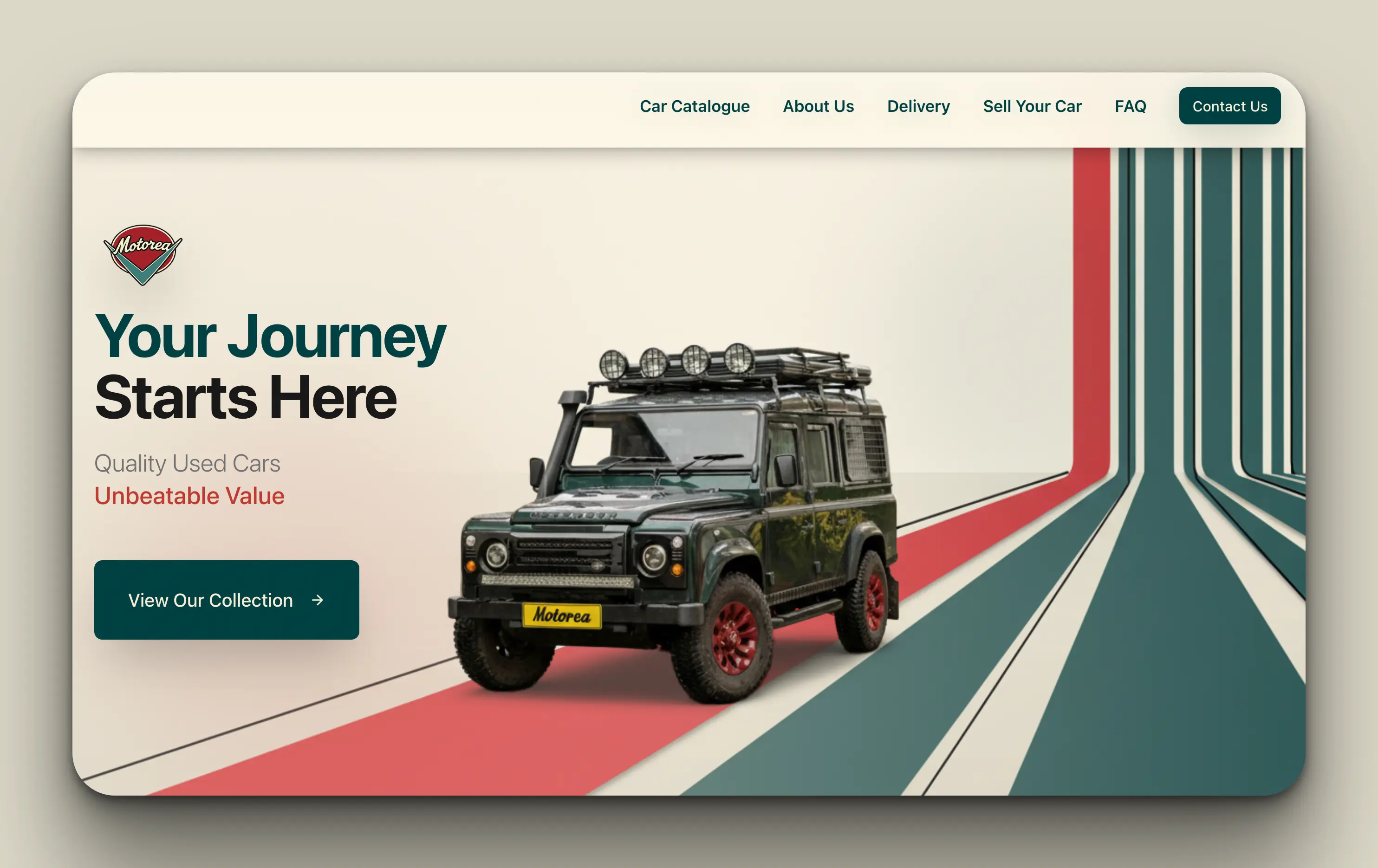
Buying a used car can be a nerve-wracking experience for most people. The market is filled with dealers who might hide issues, inflate prices, and disappear after the sale. Buyers are well aware of this, which is why they tend to do their homework thoroughly before even making a call. 
If your online presence doesn’t provide clear and convincing answers right away, they’ll likely move on - often to AutoTrader or a franchised dealer with a shiny website and a helpful chat bot.
Motorea did not have any online software solutions and lacked the digital setup. Before the platform was launched, everything was done manually. People would hear about Motorea through word of mouth or social media, then message the team directly.
He would spend 20 to 30 minutes explaining specs, sending photos via WhatsApp, and walking them through the buying process from the ground up - every single time, for every inquiry, whether the person was ready to buy or just browsing. That approach works when you have just a handful of cars in stock, but it’s not sustainable when you’re aiming for something larger.
    The business challenge
    There were a few key issues the platform needed to address:
    First, there was no way for buyers to search and find what they wanted on their own. Without a proper catalog and filtering options, every "do you have anything in my budget?" message ended up in clients team’s inbox, requiring a manual reply. The platform needed to anticipate that question before it was even asked.
    Second, there was no reservation process. Serious buyers couldn’t secure a car online. There was no way to put down a deposit, no confirmation step, and no clear structure. In a fast-moving market, this meant losing buyers who were ready to commit but found no way to do so.
    Third, there was a lack of proof of track record. A new brand without any sales history visible online is a tough sell. Buyers needed to see that others had actually purchased from Motorea and left satisfied - not just take client’s team word for it.
    Lastly, there was no way to scale nationally. With delivery options available, the potential customer base spanned the entire UK. . But converting someone who can't visit in person requires a completely different level of digital transparency - condition reports, statutory protections, clear delivery logistics. Without all of that in one place, nationwide sales were a nice idea rather than a real business model.
    Case study image
    motorea-car-catalogue.webp

    Client overview

    The client operates Motorea from North Kensington in West London. He sources high-quality used cars, gets them ready for sale, and connects with buyers all over the UK. There’s no crowded forecourt filled with salespeople, no finance department pushing complicated PCP deals, just straightforward service.
    What really makes Motorea stand out isn’t just the cars themselves - it’s the way they do business. Each vehicle comes with a detailed condition report, an HD walkaround video, and a verified history. Buyers can have an honest conversation with someone who truly understands the car. Warranties range from 3 to 12 months, depending on what the buyer prefers. They also offer nationwide delivery, and every remote purchase is protected by distance-selling rights under the Consumer Rights Act.
    It’s the kind of buying experience that used to be exclusive to in-person visits, and the goal was to bring that same level of service online.

    Project description

    The Motorea web application is built on Next.js, a framework that effortlessly handles server-side rendering, which is crucial for SEO in the automotive retail space. Every listing page, category page, and information page is rendered as real HTML, making it easy for Google to crawl and index. 
    If it were just a client-rendered React app, search engines would see an empty shell, leaving the entire catalog invisible to anyone searching for specific makes and models. For a business that relies on organic discovery, that’s a deal-breaker.
    The application is designed with a mobile-first approach. With over 60% of used car searches in the UK starting on mobile devices, a catalog that doesn’t function well on phones is simply not viable.
    Project description

    Looking to build a similar solution?

    InterCode has extensive experience in building car dealerships and automotive software solutions for the past decade.

    Discovery & strategy

    Before diving into the coding, the team took a step back to figure out who would actually be using this platform and what their needs would be. They identified three main types of users.
    First up was the ready buyer - someone who’s already made up their mind about wanting a used car within a specific price range and just needs to find the perfect match. They’re looking for quick, precise filtering and a straightforward way to make a reservation. Any extra clicks could send them packing.
    Next, there’s the browser - someone who’s still exploring their options, comparing different cars, and putting together a shortlist. For these users, the "Previously Sold" gallery is important. They value client testimonials and the quality of listing photos. Trust is something that builds over time, and the platform needs to earn it.
    Lastly, we have the seller - someone wanting to trade in their current car. They need a dedicated entry point that allows them to bypass the buying process and get straight to the relevant form.
    From that point on, every design choice revolved around one key question: does this help clarify intent, or does it help foster trust? If it didn’t do either, it simply didn’t make the cut.
     
    Discovery & strategy
    motorea-car-catalogue.webp

    The catalogue

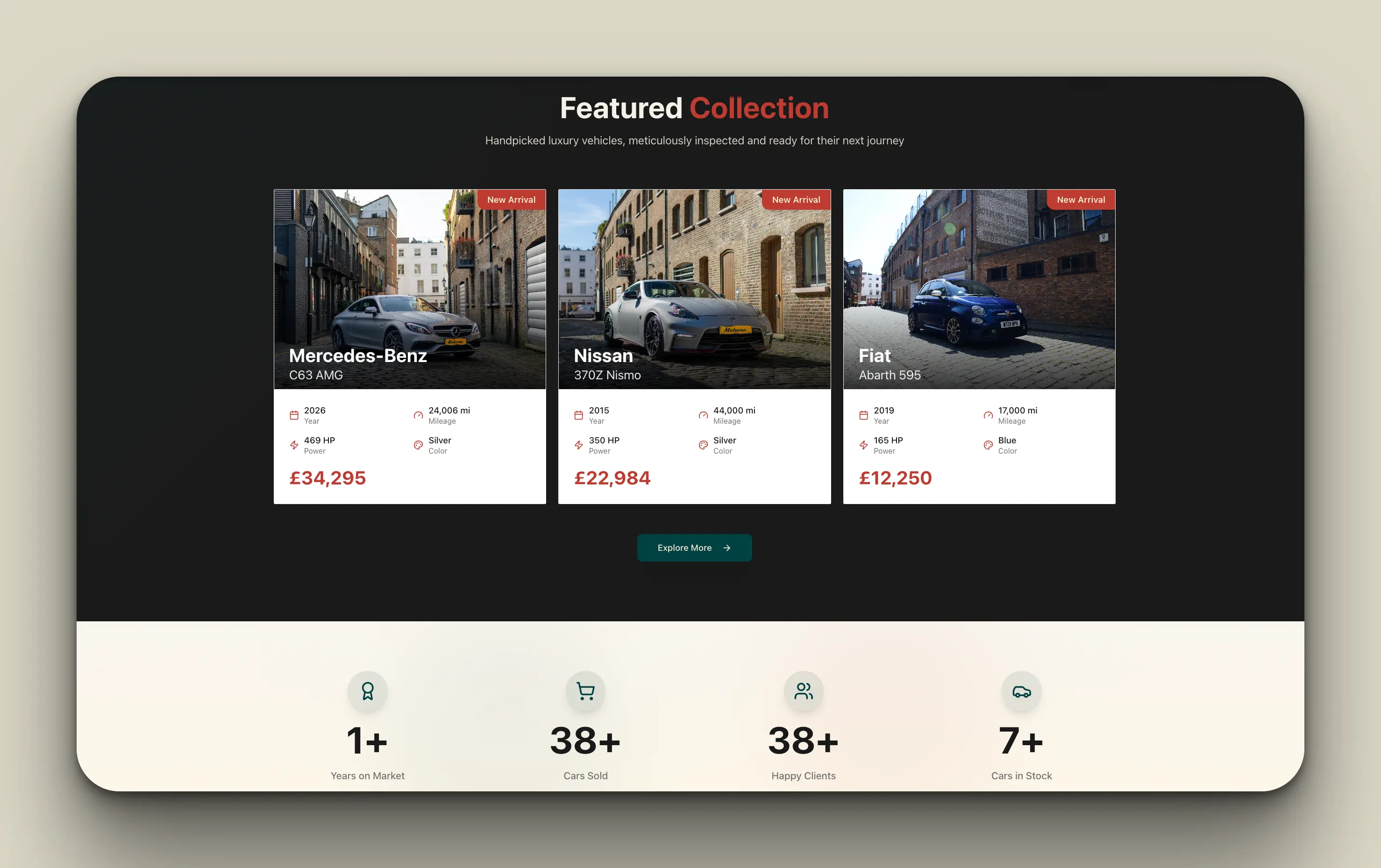
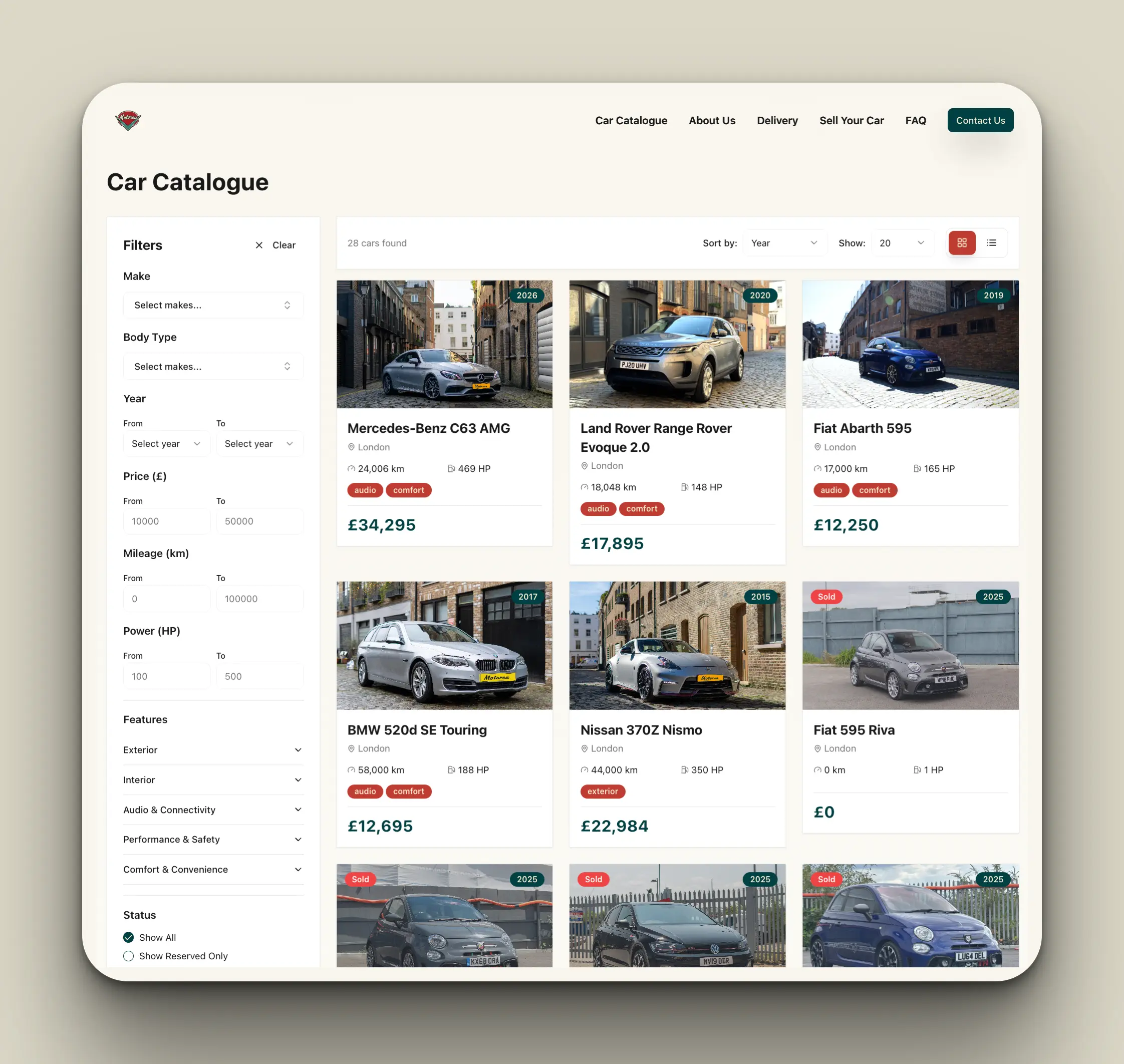
    The car catalog is the core of the platform. Buyers can filter by make, body type, year range, price in GBP, mileage, power output in HP, and a detailed feature checklist divided into five categories: Exterior, Interior, Audio & Connectivity, Performance & Safety, and Comfort & Convenience. All of this happens client-side after the initial data load, so there are no page refreshes, loading spinners, or waiting around.

    One standout feature is the listing status filter. Buyers can opt to view only available cars or browse through reserved and sold vehicles. This isn’t just a nice touch; it’s a strategic trust mechanism. When buyers see that cars are moving, that others are reserving and purchasing, it creates genuine urgency without any artificial pressure. Plus, it means the platform serves as a living portfolio of Motorea’s sales history.
    motorea-mercedez-benz.webp

    Individual listings

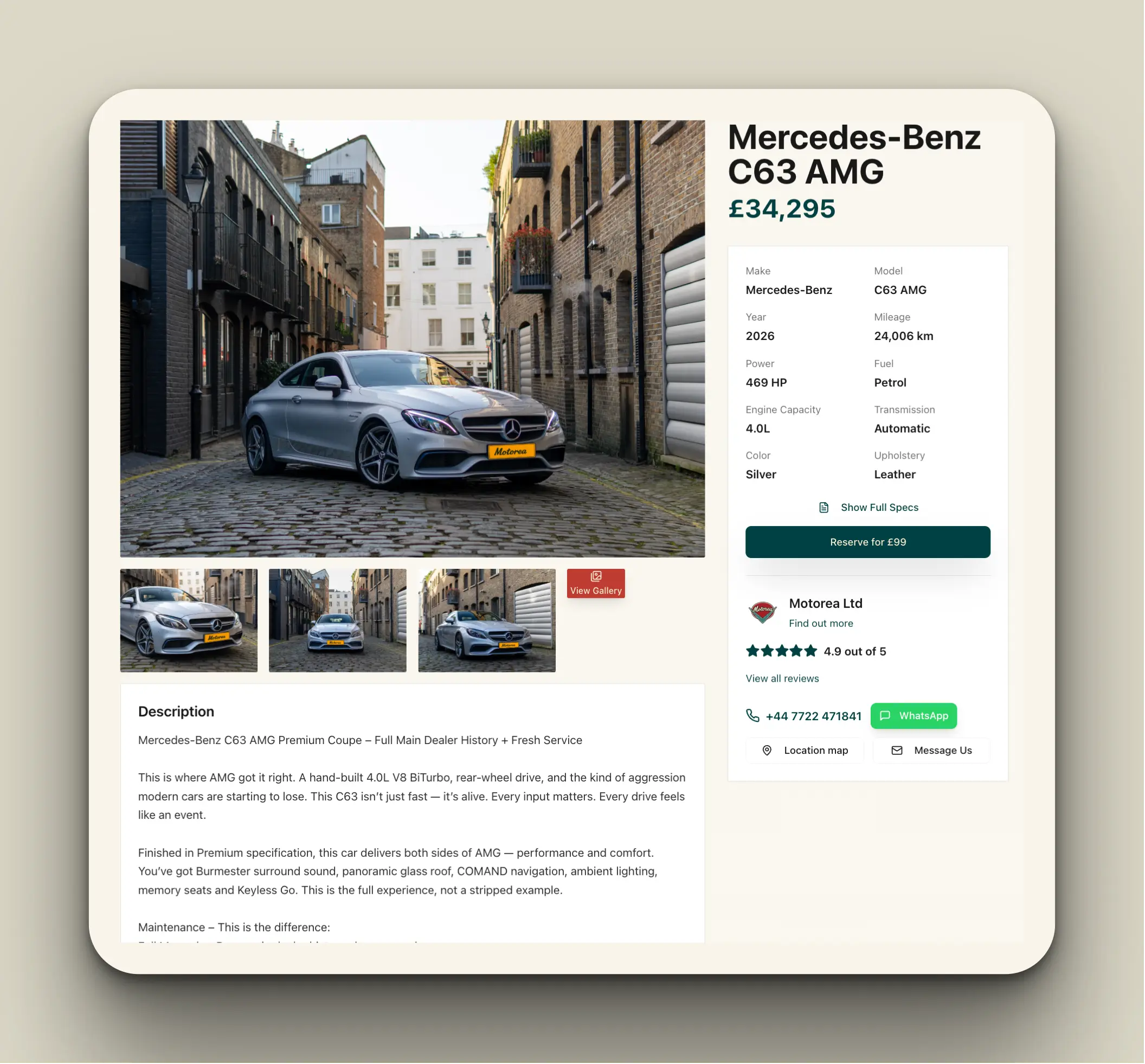
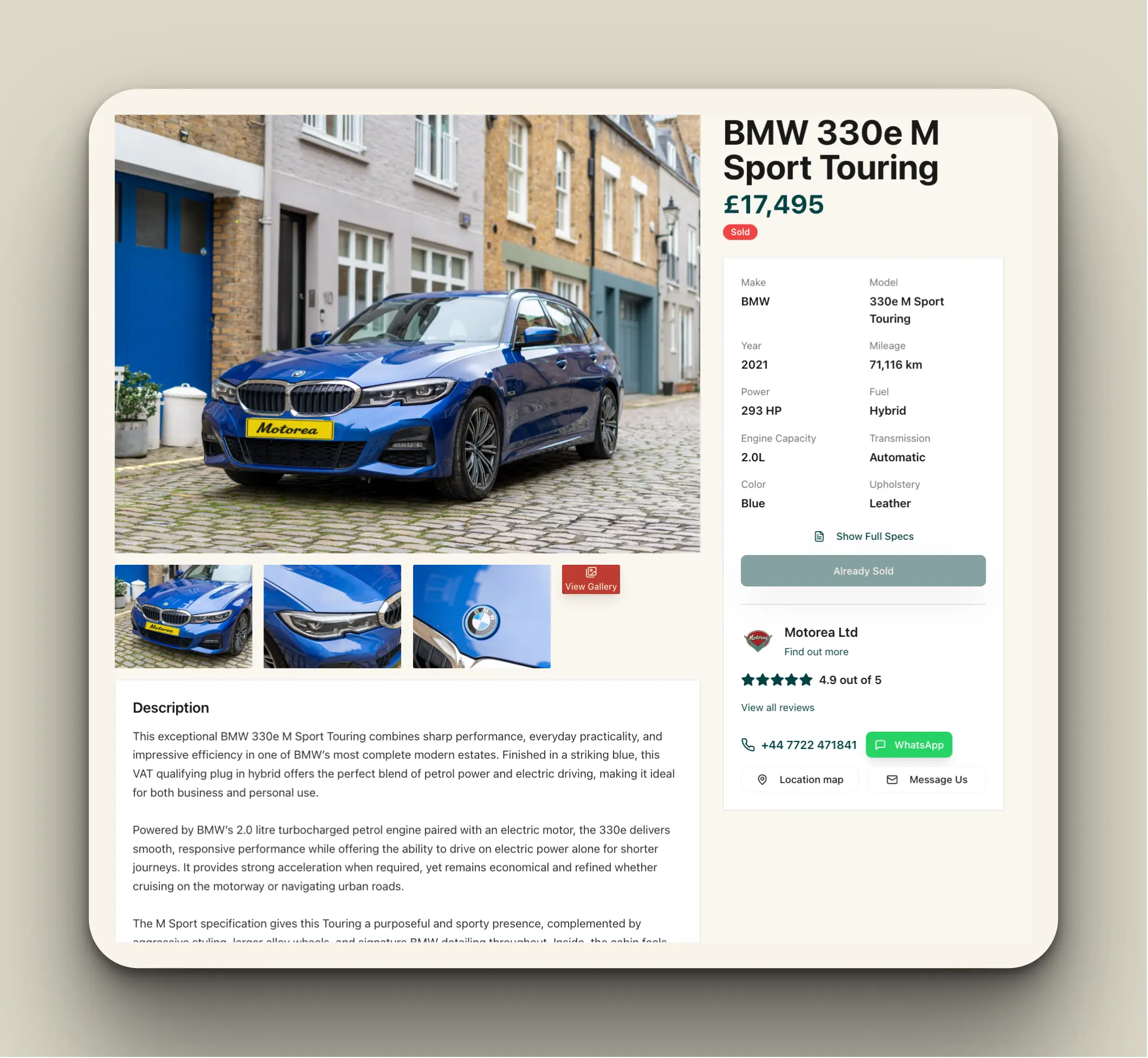
    Each vehicle page is crafted to answer every question a buyer might have before they even think about picking up the phone. You’ll find full specifications, HD walkaround images, detailed condition reports, verified history, and warranty options - all in one place. The reservation mechanism is embedded directly in the listing: a buyer can secure any car with a £99 deposit and immediately receive confirmation, without the process depending on client’s team being available to respond.
     
    motorea-bmw.webp

    Sell Your Car

    The seller flow captures the information the client actually needs upfront - vehicle details, condition, what the seller is looking for. It means that by the time a conversation starts, both sides already have context. No more back-and-forth asking for the reg number.
     
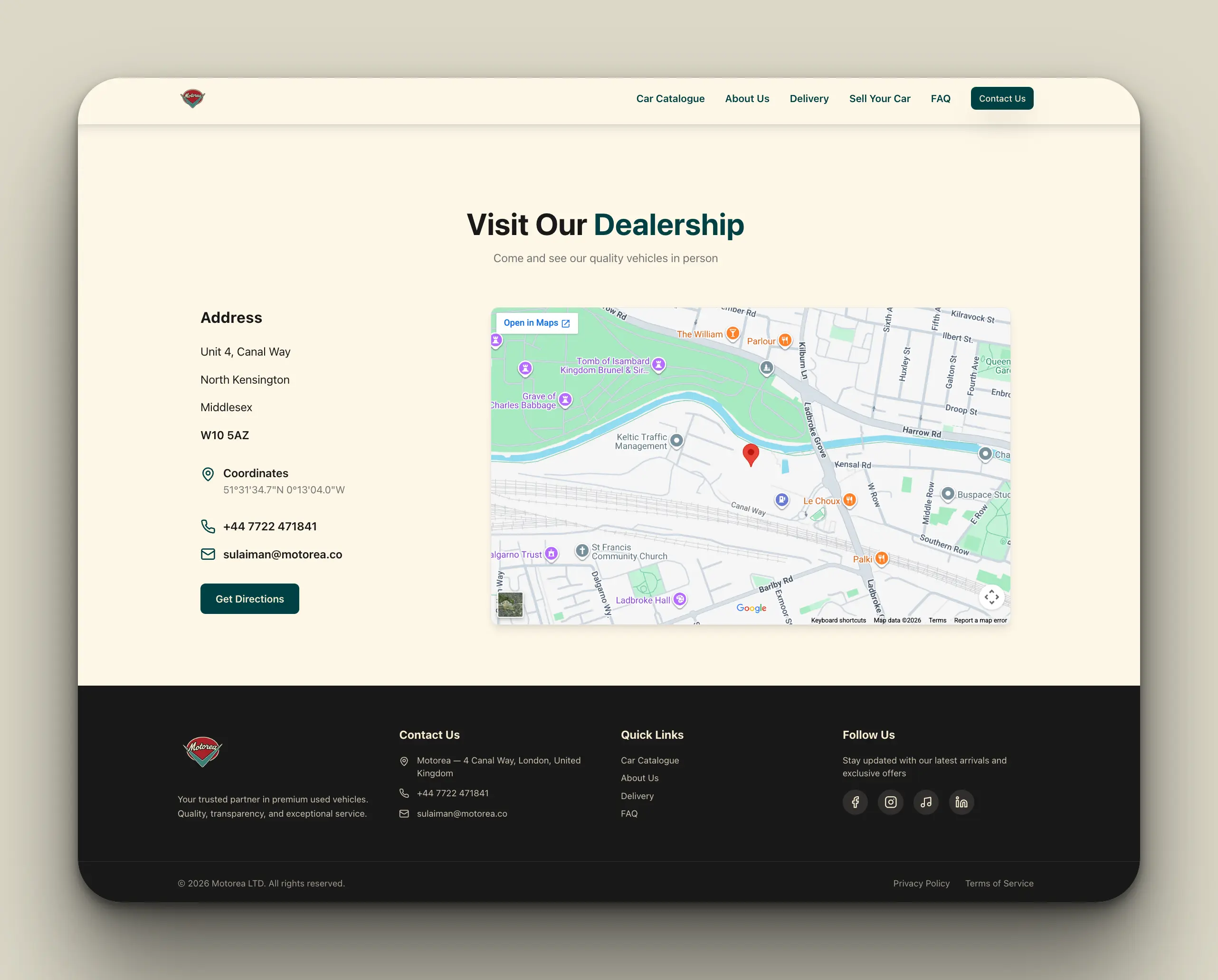
    motorea-visit-our-office.webp

    Delivery & buying process pages

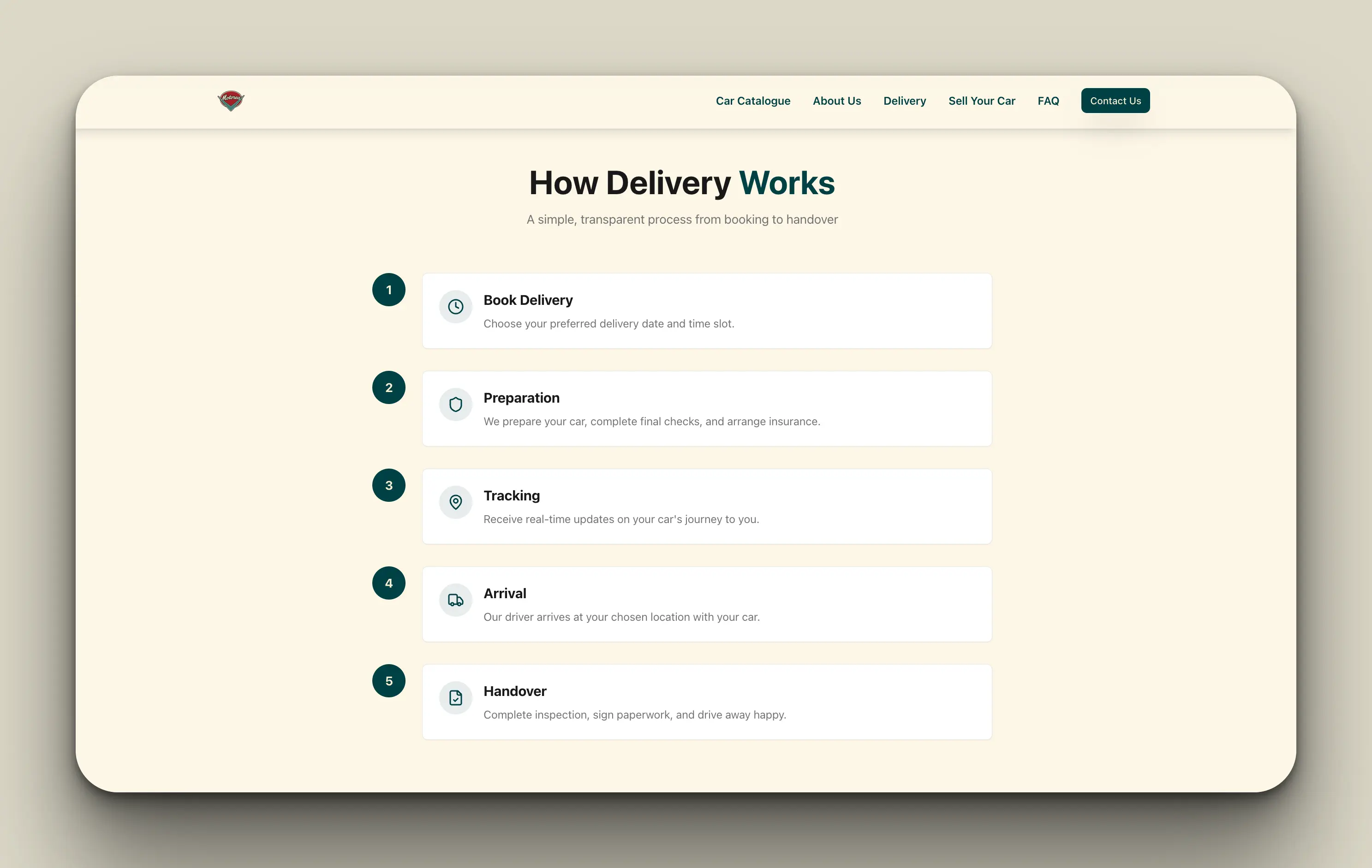
    These pages do a specific job: they reduce hesitation in remote buyers. Someone in Birmingham considering a £15,000 car from a London dealer they've never heard of needs to understand exactly what happens after they click "Reserve." The delivery page explains it in plain language — trackable nationwide delivery, doorstep handover, 14-day distance-selling right, Consumer Rights Act compliance. Removing that uncertainty is the difference between a conversion and a bounce.

    Value delivered

    What changed for buyers
    Anyone visiting motorea.co now gets a buying experience that rivals dealers with five times the headcount and ten times the marketing budget. The filtering catalogue means they can find relevant stock in under a minute. The listing pages give them everything they need to make a decision remotely. The reservation flow lets them act on that decision immediately. And the 14-day return right means there's no risk in doing it all from their sofa.
    What changed for Motorea
    The shift is simple but significant: our client now enters conversations with buyers who've already done their homework. They've seen the car, read the condition report, and understood the process. The first message isn't "what have you got?" - it's "I'd like to reserve this one." That compression of the sales cycle is where the real operational value sits.
     
    Value delivered

    A few specific changes worth noting:
    The platform enables genuine nationwide sales, not just occasional ones. The combination of transparent listings, clear statutory protections, and a structured delivery page gives buyers outside London the confidence to purchase without a visit. That's a structural expansion of the addressable market - not a marginal improvement to the existing one.
    The "Previously Sold" gallery accumulates value over time. Every completed sale adds to a public archive that future buyers can browse. Six months in, that archive is a stronger trust signal than any amount of marketing copy.
    The Sell Your Car form pre-qualifies seller enquiries. Instead of a vague "I'm thinking of selling my car" message, Motorea receives structured data that makes every conversation more efficient.
    And the catalogue manages itself. Inventory can be listed, updated, reserved, and marked sold in real time - no developer needed, no delays, no manual workarounds. 
    Case study image

    Technologies Used

    Next.js (React)Next.js (React)
    TypeScriptTypeScript
    VercelVercel
    Claude CodeClaude Code
    LovableLovable

    Conclusion

    For a dealership selling cars in the £10,000 – £50,000+ range, the platform pays for itself many times over with each additional sale it facilitates. The more meaningful number is the long tail: a well-indexed Next.js catalogue compounds over time as Google indexes more listings and category pages, driving organic traffic that requires no ongoing ad spend. The thing that made this project work wasn't the tech stack - it was the clarity of the brief. Motorea doesn't compete on volume or price. It competes on trust, transparency, and the experience of dealing directly with someone who knows the car inside out.  Motorea is a good example of what focused digital work looks like for an independent dealer. The platform didn't try to out-feature AutoTrader. It tried to do one thing well: give a buyer in any postcode in the UK enough confidence to purchase a premium used car from a dealer they found online an hour ago. That required the right technical foundation - Next.js for SEO, Vercel for performance, a proper filtering engine, a clean reservation flow - but the technology was in service of a simpler goal. Make it easy to trust. Make it easy to buy.  
    Start Your Project

    Ready to Implement?

    Let's discuss how our comprehensive solutions can address your specific challenges and drive success for your business. Get in touch with our team by filling out the form.

    Related Articles

    SEO optimization and Contextual Ads: Where to start?

    Learn how to optimize your website for search engines and about contextual advertising with our step-by-step guide.

    Read article →

    Custom Code vs No-Code vs AІ

    Of course, we don’t know what is best for you in your specific case. But we know for sure that the best solution for us is Custom сode.

    Read article →

    How to Monetize Your SaaS Application: Pricing Models and Strategies for Success

    Learn how to maximize revenue and build a loyal user base for your SaaS, including value-based pricing tiers. Start optimizing your SaaS now!

    Read article →