Multi-agent AI orchestration platform
Design and build autonomous AI agent systems that reason, plan, and act across complex multi-step workflows. InterCode delivers production-grade agentic ai development — from single-task agents to fully distributed multi-agent architectures.
What is AI Agent Orchestration?
AI agent orchestration is the discipline of designing, building, and managing systems where one or more autonomous AI agents collaborate to accomplish complex tasks. Unlike simple LLM integrations, agentic ai development involves agents that can reason about goals, select tools, execute actions, observe results, and adjust their approach — all with minimal human intervention.
A multi-agent orchestration platform coordinates multiple specialised agents — each responsible for a distinct domain (research, code generation, data retrieval, communication) — under an orchestration layer that routes tasks, manages state, and handles failures. This architecture enables ai agent workflow automation that would be impossible for a single model to handle reliably.
At InterCode, our ai agent architecture practice covers everything from single-agent task automation to complex multi-agent system development with persistent memory, tool binding, human approval workflows, and production monitoring. We build systems designed to work in the real world — not just in demos.
AI Agent Development Services
From single-agent prototypes to enterprise multi-agent platforms — we architect and build AI agent systems at every scale.
Agent Architecture Design
We design the right agent topology for your use case — choosing between supervisor patterns, hierarchical multi-agent meshes, or custom orchestration based on your task complexity and reliability requirements.
- Single-agent vs. multi-agent design
- Supervisor & worker patterns
- Latency vs. accuracy trade-offs
- Scalability planning
Multi-Agent Workflow Orchestration
Build orchestration layers that coordinate multiple specialised agents — routing tasks intelligently, managing state across steps, and handling inter-agent communication reliably.
- LangGraph workflow development
- CrewAI multi-agent systems
- Custom orchestration engines
- Parallel agent execution
Tool & API Binding
Equip your agents with the tools they need — web search, code execution, database queries, external APIs, file operations, and custom business logic functions.
- MCP tool integration
- Custom tool development
- Sandboxed code execution
- API connector library
Human-in-the-Loop Design
Build trust and safety into your agentic workflows with approval gates, escalation paths, and full audit trails — so humans maintain meaningful oversight of high-stakes decisions.
- Approval workflow design
- Escalation handling patterns
- Confidence threshold controls
- Full decision audit trails
Agent Memory & State Management
Implement short-term and long-term memory for agents — conversation context, persistent knowledge bases, and cross-session learning that makes agents genuinely useful over time.
- Short-term context windows
- Long-term vector memory (Pinecone, Weaviate)
- Cross-agent state sharing
- Memory compression strategies
Agent Evaluation & Safety
Test, benchmark, and monitor your agents in production — catching hallucinations, infinite loops, unexpected tool usage, and drift before they impact users or cost you money.
- Automated agent evaluation suites
- Hallucination detection
- Loop & drift detection
- Safety guardrails & content filtering
How We Build AI Agent Systems
Use Case Analysis & Agent Design
We analyse your target workflows, define the agent boundaries, and design the orchestration architecture — including what tools each agent needs, how they communicate, and where human oversight is required.
- Workflow decomposition
- Agent responsibility mapping
- Tool requirement analysis
- Human oversight design
Single-Agent Prototype
Before building a full multi-agent system, we validate the core agent behaviour in a controlled prototype — testing tool binding, model performance, and edge case handling at small scale.
- 2-week prototype sprint
- Tool integration testing
- Model benchmarking
- Edge case identification
Full Multi-Agent Development
We build the full orchestration system — implementing all agents, the coordination layer, memory systems, human-in-the-loop workflows, and evaluation pipelines with comprehensive automated testing.
- Agent implementation
- Orchestration layer development
- Memory system integration
- Evaluation pipeline setup
Production Deployment & Monitoring
We deploy the agent system to production with full observability — agent execution tracing, cost monitoring, error alerting, and a dashboard so your team can watch agents work and intervene when needed.
- Production deployment
- Agent execution tracing
- Cost & latency monitoring
- Runbook & knowledge transfer
Use Case Analysis & Agent Design
We analyse your target workflows, define the agent boundaries, and design the orchestration architecture — including what tools each agent needs, how they communicate, and where human oversight is required.
- Workflow decomposition
- Agent responsibility mapping
- Tool requirement analysis
- Human oversight design
Single-Agent Prototype
Before building a full multi-agent system, we validate the core agent behaviour in a controlled prototype — testing tool binding, model performance, and edge case handling at small scale.
- 2-week prototype sprint
- Tool integration testing
- Model benchmarking
- Edge case identification
Full Multi-Agent Development
We build the full orchestration system — implementing all agents, the coordination layer, memory systems, human-in-the-loop workflows, and evaluation pipelines with comprehensive automated testing.
- Agent implementation
- Orchestration layer development
- Memory system integration
- Evaluation pipeline setup
Production Deployment & Monitoring
We deploy the agent system to production with full observability — agent execution tracing, cost monitoring, error alerting, and a dashboard so your team can watch agents work and intervene when needed.
- Production deployment
- Agent execution tracing
- Cost & latency monitoring
- Runbook & knowledge transfer
AI Agent Frameworks & Tools
We are framework-agnostic — we choose based on your task complexity, not tool popularity.






Our primary orchestration frameworks are LangGraph (for complex stateful workflows) and CrewAI (for role-based multi-agent collaboration). For simpler automation workflows, we also work with n8n and custom Python orchestration. We select models based on task requirements — GPT-4o for complex reasoning, Claude 3.5 for long-context tasks, and smaller models for latency-sensitive subtasks within a pipeline.
Agent Systems We Have Built
Built a multi-agent AI system for an outdoor advertising company — a coordination agent, a venue availability agent, a pricing agent, and a booking confirmation agent working in sequence. Handles complete booking flows from inquiry to confirmation without human intervention.
View case studyDesigned an orchestration layer that coordinates content generation agents, targeting optimisation agents, and performance monitoring agents to automate the full job advertising lifecycle across social media platforms.
View case studyBuilt and open-sourced our own AI agent framework — Open Claw — used internally for rapid agent prototyping and shared with the developer community as a reference architecture for production AI agent systems.
View case studyWhy InterCode for AI Agent Development
Production AI Agent Experience
We have shipped autonomous AI agents to production — not just built demos. Our agents handle real transactions, make real decisions, and operate reliably at scale. We understand the failure modes that only reveal themselves in production and design against them from the start.
Framework-Agnostic Approach
We choose the right orchestration framework for your problem — LangGraph for complex stateful workflows, CrewAI for role-based collaboration, or custom Python for maximum control. We are not advocates for any single framework; we are advocates for what works.
Observability Built-In
Every agent system we build includes execution tracing, decision logging, cost monitoring, and alerting. You can watch your agents work, understand why they made specific decisions, and intervene quickly when something goes wrong.
Human-Centred Agent Design
We believe autonomous agents need meaningful human oversight — not as an afterthought, but as a core design principle. Every high-stakes agent workflow we build includes approval gates, escalation paths, and audit trails that give your team control without eliminating the automation benefits.
Learn More About AI Agents
Insights and practical guides from our engineering team
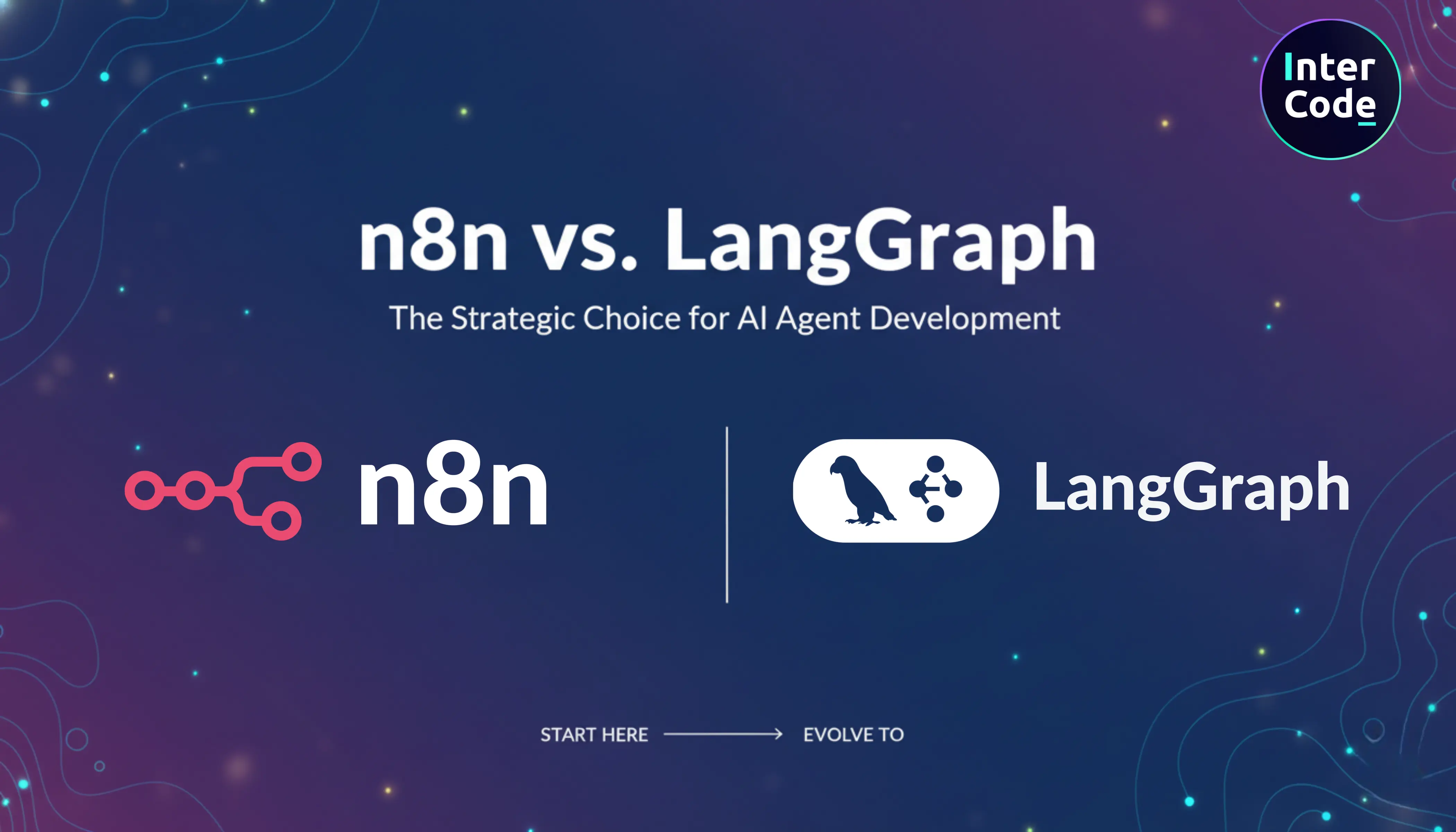
LangGraph vs n8n for AI agents development in 2026
Discover what technology to use for building AI agent. If n8n is solid enough or only for prototyping. Details of LangGraph framework for AI agent development.
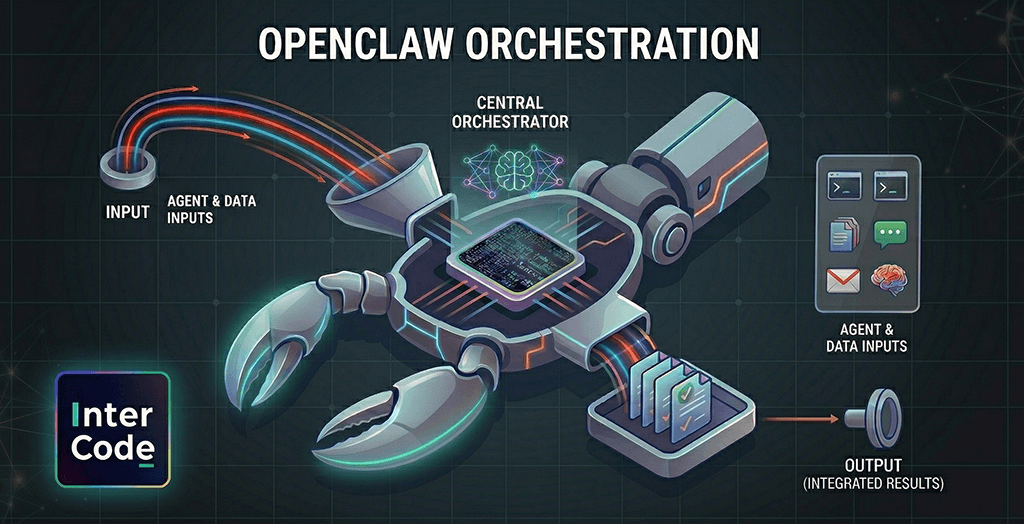
Multi-agent orchestration in OpenClaw: how does it work under the hood?
OpenClaw seems like AGI, but it's pure engineering. Discover the five input types that drive this open-source agent runtime to appear proactive.
Vibe Coding vs. Spec-Driven Development: The Future of AI-Assisted Software Engineering in 2026
Discover why the software engineering industry is shifting from iterative "vibe coding" to structured spec-driven development for AI-assisted coding in 2026.
Frequently Asked Questions
AI agent orchestration is the process of coordinating multiple autonomous AI agents to work together on complex tasks. An orchestration layer routes subtasks to specialised agents, manages shared state, handles failures, and aggregates results. This enables ai agent workflow automation that is far more capable and reliable than a single LLM prompt — because each agent can specialise, and the system can run multiple agents in parallel.
A single AI agent handles tasks sequentially using one model and a set of tools. A multi-agent system distributes tasks across specialised agents — for example, a research agent, a writing agent, and a quality review agent — that collaborate under an orchestration layer. Multi-agent system development is appropriate when tasks are complex enough to benefit from specialisation, parallelism, or when different subtasks require different models or tools.
We primarily use LangGraph for complex stateful agent workflows and CrewAI for role-based multi-agent collaboration. We also have production experience with AutoGen and custom Python orchestration for low-latency or high-control scenarios. Our ai agent framework selection is always driven by your specific requirements — not framework preference.
A single-agent automation (e.g., a research agent or a document processing agent) typically takes 3–5 weeks from design to production. A multi-agent orchestration platform with 3–5 specialised agents, memory systems, and human-in-the-loop controls typically takes 8–14 weeks. We always start with a 2-week prototype sprint to validate the core agent behaviour before the full build.
Yes — autonomous ai agents development is a core specialisation for us. However, we strongly recommend designing meaningful human oversight into any agent system that touches customer data, financial transactions, or other high-stakes domains. Fully autonomous agents are appropriate for low-risk, well-defined tasks. For complex or high-stakes workflows, we design approval gates and escalation paths that preserve automation benefits while keeping humans in control of critical decisions.
Ready to Build Your AI Agent System?
Tell us about your automation challenge. We will design an agent architecture, assess the technical approach, and outline a path to production — in a free 60-minute technical consultation.
Contact Us