Vibe Coding vs. Spec-Driven Development: The Future of AI-Assisted Software Engineering in 2026
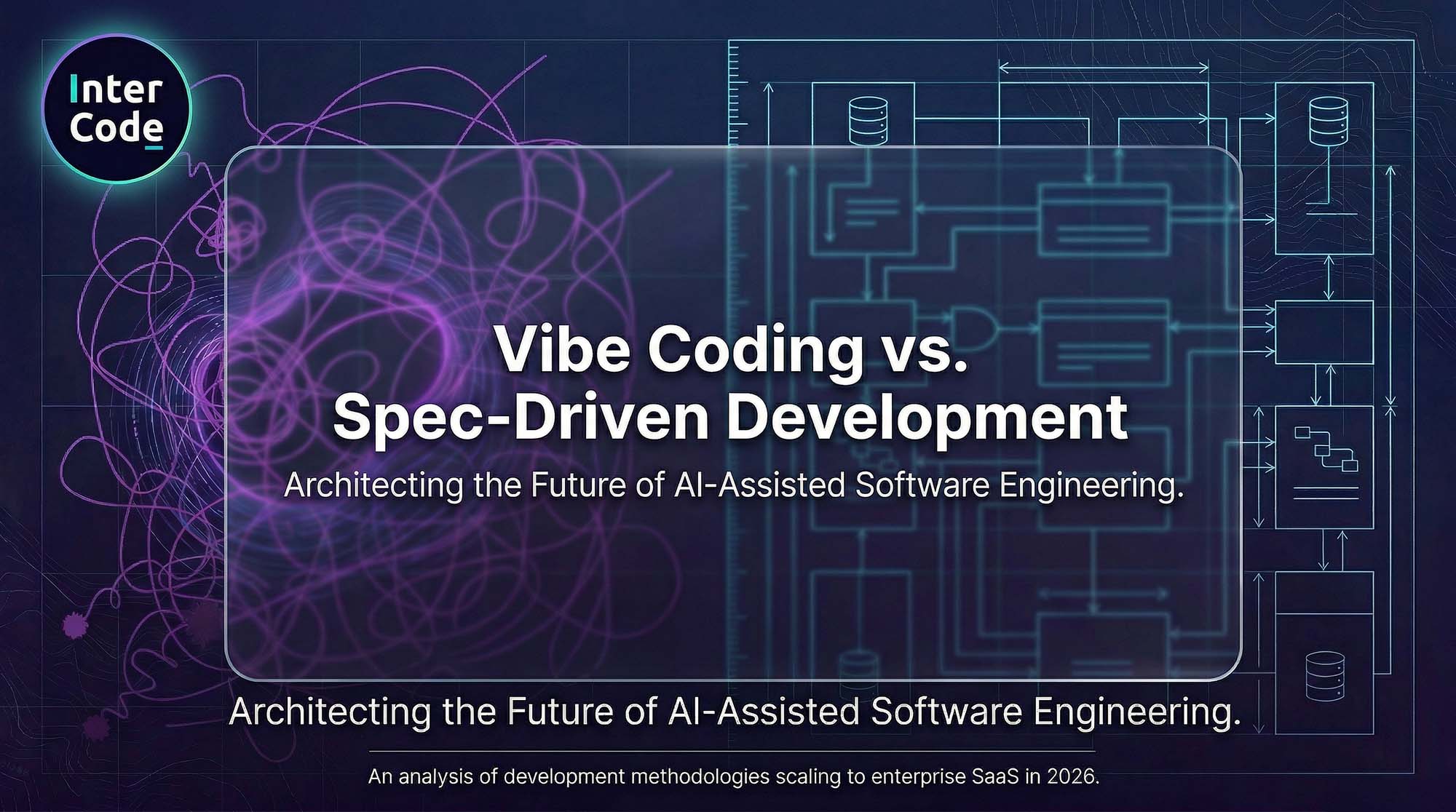
The way applications are built is fundamentally changing.
Previously, writing and reviewing code was the most difficult part of software engineering, but today, the real challenge lies in knowing how to effectively convey what you want to build to a Large Language Model (LLM). As developers look to maximize AI-assisted coding in 2026, two primary methodologies have emerged: vibe coding and spec-driven development.
Previously, writing and reviewing code was the most difficult part of software engineering, but today, the real challenge lies in knowing how to effectively convey what you want to build to a Large Language Model (LLM). As developers look to maximize AI-assisted coding in 2026, two primary methodologies have emerged: vibe coding and spec-driven development.
To understand why the industry is shifting aggressively toward spec-driven development for enterprise execution, we must first look at the history of the software development lifecycle, how early AI coding habits disrupted it, and what the future holds for 2026 and beyond.
The Foundation: The Traditional SDLC
Before AI coding agents became mainstream, developers relied on established methodologies to build reliable software. In Traditional Development, engineers typically started with their intuition, writing code first and documentation second. This evolved into Test-Driven Development (TDD), where engineers established the required functionality and tests first, and then wrote code to meet those specific criteria.
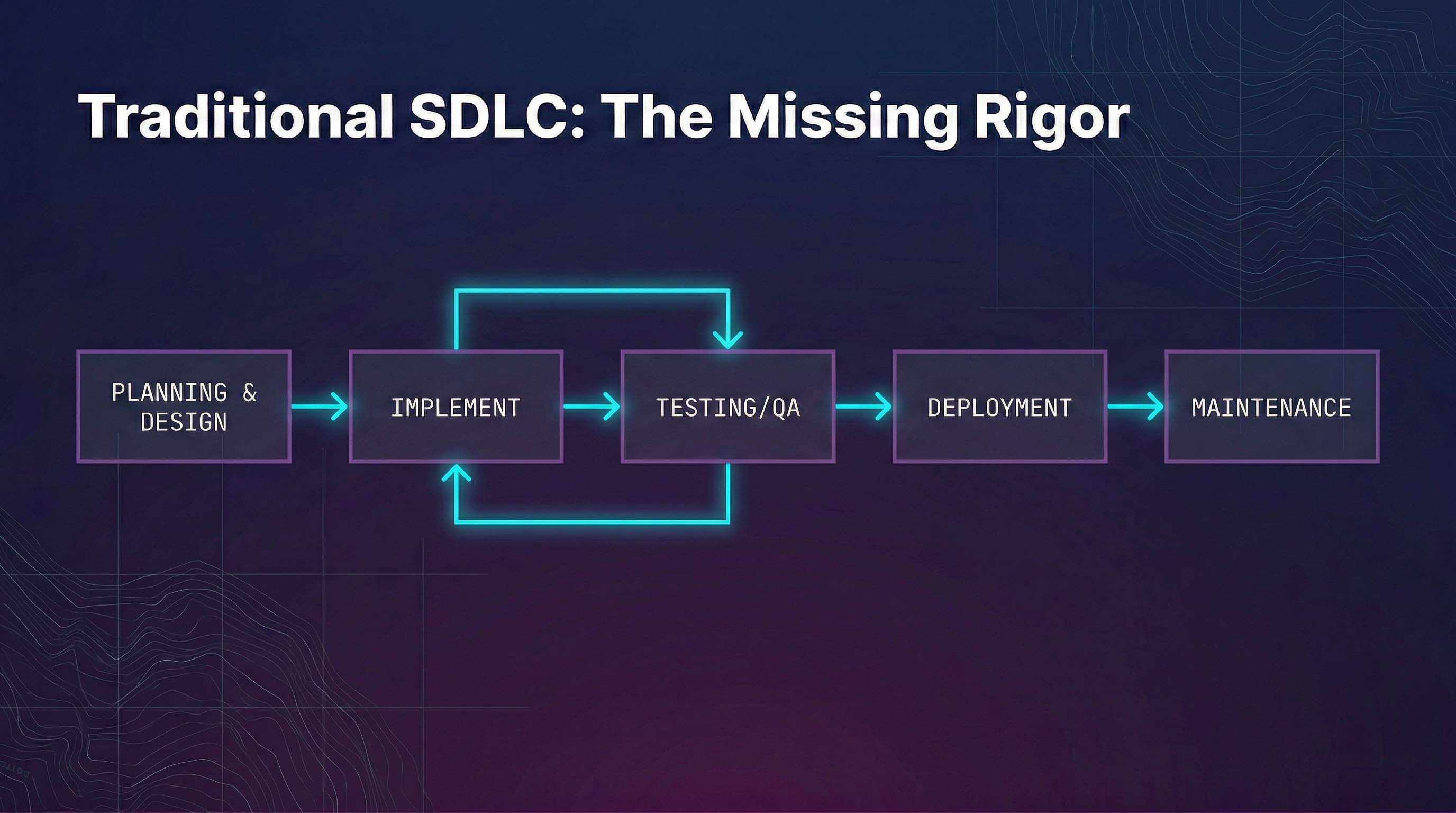
Both of these methodologies fit within the broader Software Development Lifecycle (SDLC), a structured approach foundational for proper software engineering. The traditional SDLC consists of five strict phases:
- Planning and Designing: Establishing specific project requirements, usually centralized in a Project Requirements Document (PRD).
- Implementation: Building features based on the established requirements.
- Testing and Quality Assurance: Verifying that the code works correctly.
- Deployment: Pushing verified code from development to staging and production.
- Maintenance: The ongoing upkeep of the project.
The Rise and Pitfalls of "Vibe Coding"
When AI coding agents were introduced, developers quickly adopted what is known as vibe coding.
Vibe coding relies on quick, iterative trial-and-error. A developer starts by prompting the AI agent for a specific application or functionality. The AI model then guesses what the user wants based on its training and generates boilerplate code. If the output isn't perfect, the developer edits their prompt, and goes back and forth with the AI in a continuous loop until they reach the desired implementation.
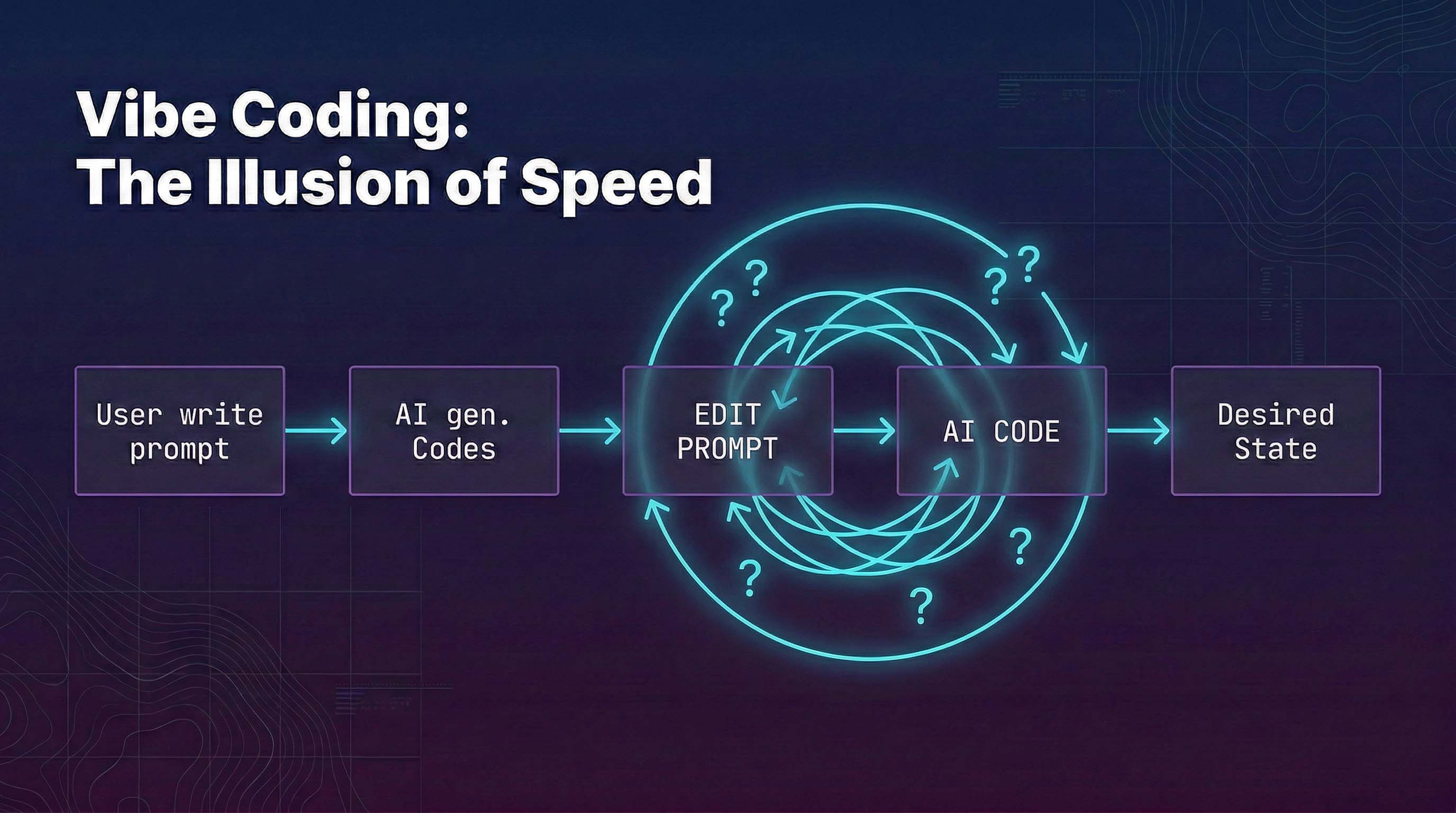
While vibe coding feels like magic and is fantastic for quick, on-the-fly edits, it has a massive flaw: it completely skips the traditional software development lifecycle.
Because the AI model is forced to guess the best solution from a simple prompt, it might have 30 different ways to implement a single feature. Running the exact same prompt could yield a different result every time. This high level of ambiguity leads to frustrating back-and-forth loops that can sometimes take longer than simply writing the code manually.
Because the AI model is forced to guess the best solution from a simple prompt, it might have 30 different ways to implement a single feature. Running the exact same prompt could yield a different result every time. This high level of ambiguity leads to frustrating back-and-forth loops that can sometimes take longer than simply writing the code manually.
The Shift: Why Engineers Must Adopt Spec-Driven Development
To build reliable software in an AI-native world, engineers must transition to spec-driven development (also known as spec coding). This approach is described as being like "test-driven development and behavior-driven development on steroids".
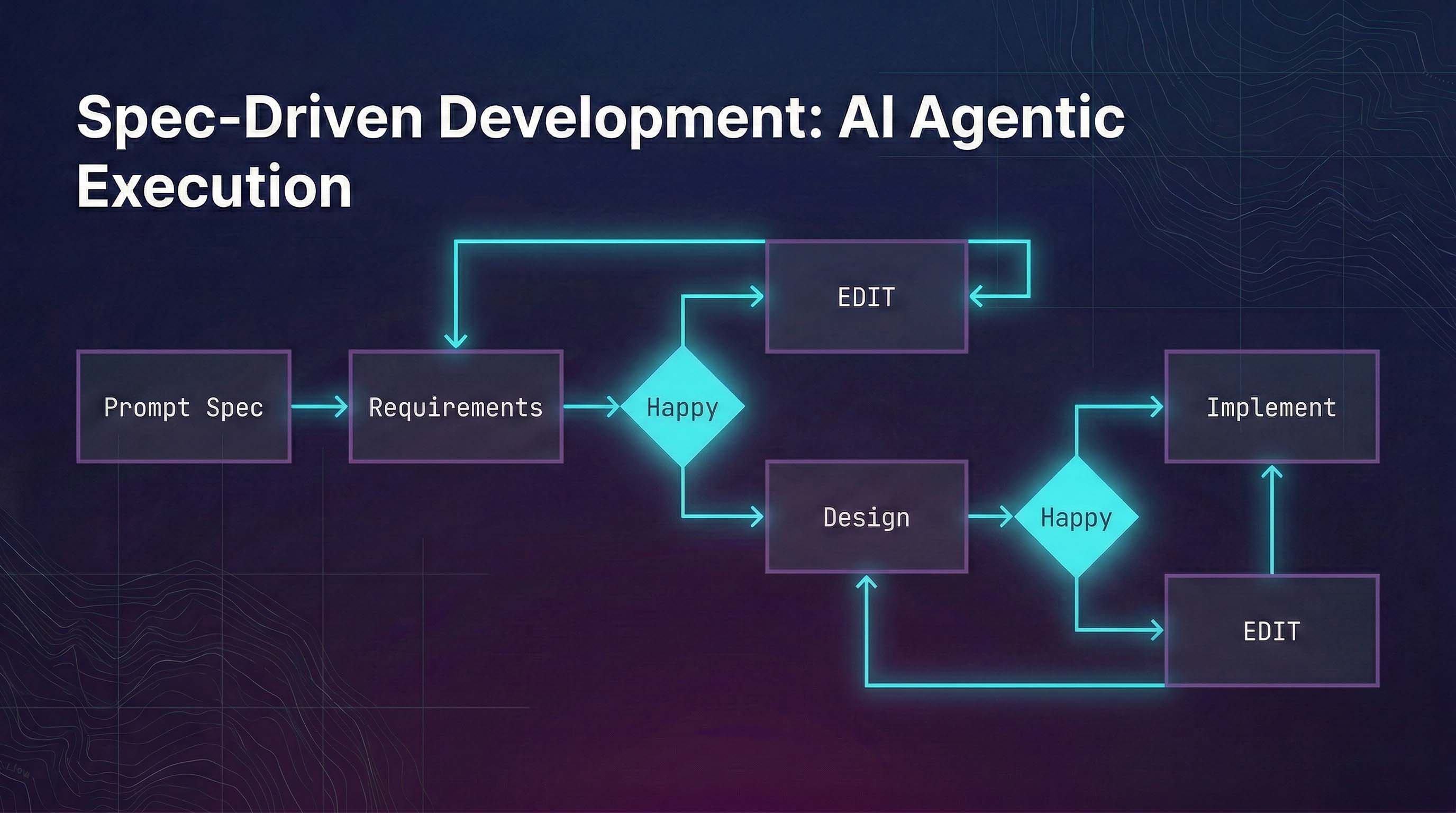
Spec-driven development successfully injects the crucial planning and design components of the traditional SDLC back into AI-generated software development. Instead of relying on a model to guess an implementation, this methodology follows a rigorous, planned workflow.
1. Prompting for Behavior: Instead of asking for immediate code, the developer prompts the AI with the desired behavior and constraints of the system.
2. Requirements Generation: The AI uses this initial prompt to generate a requirements specification, acting as a strict "contract" for the project.
3. Review and Design: The developer reviews and approves the requirements, which are converted into a detailed design document mapping out specific "to-dos”. At this stage, no code has been written, allowing the engineer to edit the exact implementation plan.
1. Prompting for Behavior: Instead of asking for immediate code, the developer prompts the AI with the desired behavior and constraints of the system.
2. Requirements Generation: The AI uses this initial prompt to generate a requirements specification, acting as a strict "contract" for the project.
3. Review and Design: The developer reviews and approves the requirements, which are converted into a detailed design document mapping out specific "to-dos”. At this stage, no code has been written, allowing the engineer to edit the exact implementation plan.
4. Implementation: Only after the design document is fully approved does the AI agent actually begin writing the code.
5. Downstream Testing: Because all variables, fallback codes, and constraints were defined upfront, the AI can reliably execute automated testing to verify the implementation.
5. Downstream Testing: Because all variables, fallback codes, and constraints were defined upfront, the AI can reliably execute automated testing to verify the implementation.
The Future of Spec-Driven Development in 2026: AI Agentic Execution
As we move into 2026, the industry is scaling Spec-Driven Development from a personal coding strategy into a full enterprise-grade engine for “AI Agentic Execution”, which we already operate under here at Intercode.
The future of this methodology relies on dividing the workload between human domain experts and AI coding agents to achieve unprecedented speeds:
1. The Evolution of the Developer's Role In 2026, the heavy lifting for a developer has shifted from writing boilerplate code to architecting "Pristine Specs"
Operating as a solo architect, a developer either writes the core business logic from scratch or takes a workflow provided by a business stakeholder and translates it into pure system logic
Before a single line of code is generated, the developer personally injects strict technical guardrails into the specification - carefully defining database schemas, API rate limits, and complex algorithms upfront.
Operating as a solo architect, a developer either writes the core business logic from scratch or takes a workflow provided by a business stakeholder and translates it into pure system logic
Before a single line of code is generated, the developer personally injects strict technical guardrails into the specification - carefully defining database schemas, API rate limits, and complex algorithms upfront.
2. Human-in-the-Loop AI Generation. Once this detailed blueprint is bulletproof, the developer runs the spec through an LLM. Because the specification leaves zero room for ambiguity, the AI agent acts purely as a high-speed typist rather than a decision-maker, generating massive code baselines strictly from the provided instructions. This human-in-the-loop workflow dramatically reduces delivery times, allowing the single developer to dedicate their remaining bandwidth entirely to reviewing the code for reliability, handling complex API nuances, and preventing critical failures.
Real-World Example: Building a 2026 AdTech SaaS
The necessity of Spec-Driven Development in 2026 is best illustrated by complex enterprise applications, such as an AI-Powered Digital Advertising Operating System. If a developer attempts to "vibe code" an advertising platform, naive automation can lead to massive financial overspend or critical legal failures. In 2026, these risks are mitigated entirely through upfront spec-driven planning. Architects hard-code compliance rules and complex math engines directly into the foundational blueprint. Only then are AI agents dispatched to execute the code, ensuring the resulting platform is robust enough to transition from an internal tool to a globally distributed SaaS application.
Conclusion
As AI coding tools become way more powerful in 2026 and beyond, mastering technical specifications is now more critical for engineers than the act of writing code itself. Spec-driven development leaves no ambiguity for AI agents, preventing them from guessing solutions.
By prioritizing system constraints and architectural planning over immediate code generation, the specification itself becomes the primary artifact that drives all downstream implementation, testing, and enterprise-grade deployment.
 15 likes