Full-Stack Development From Idea to Launch
Build complete web applications with one team that owns every layer. InterCode delivers frontend, backend, and infrastructure as a unified stack with consistent quality throughout.
One Team, Every Layer of Your Stack
Splitting frontend and backend across separate teams creates communication gaps, integration headaches, and finger-pointing when things break. InterCode's full-stack developers own the entire vertical — from pixel-perfect UI components to database queries to cloud infrastructure — delivering faster, more cohesive products.
Our full-stack teams work in small, autonomous squads that ship end-to-end features every sprint. Each developer understands how frontend decisions affect backend performance and how infrastructure choices impact user experience. This holistic perspective means fewer bugs, faster iterations, and a product that works as a unified whole.
Whether you are building a greenfield application, modernizing a legacy system, or adding major features to an existing product, InterCode's full-stack approach ensures technical decisions are made with the full picture in mind, not just one layer at a time.
What We Deliver
Complete web application development across every layer of the modern stack.
Responsive Frontend Development
Beautiful, performant user interfaces built with React and modern CSS that work on every device.
- Component-driven architecture
- Mobile-first responsive design
RESTful & GraphQL APIs
Well-documented APIs that connect your frontend to business logic with clean contracts.
- OpenAPI and GraphQL schemas
- Versioned and rate-limited endpoints
Database Design
Optimized data models and query patterns for relational and document databases at scale.
- PostgreSQL and MongoDB expertise
- Migration and indexing strategies
Cloud Infrastructure
Scalable, cost-efficient cloud setups on AWS, GCP, or Azure with infrastructure as code.
- Terraform and CloudFormation
- Auto-scaling and cost optimization
CI/CD Pipelines
Automated build, test, and deploy pipelines that ship code to production multiple times per day.
- GitHub Actions and GitLab CI
- Automated testing gates
Our Full-Stack Development Process
Architecture & Planning
We define the technical architecture, data model, and infrastructure requirements based on your product goals.
- System design documents
- Technology stack recommendation
Foundation Sprint
Set up the project skeleton with CI/CD, authentication, database, and core API structure.
- Boilerplate with best practices
- Automated deployment pipeline
Feature Development
Build end-to-end features in two-week sprints with demo and feedback at the end of each cycle.
- Full-stack feature ownership
- Code review on every PR
Quality Assurance
Automated and manual testing across unit, integration, and end-to-end layers for production confidence.
- 80%+ test coverage target
- Performance and security testing
Launch & Handoff
Production deployment with documentation, monitoring, and knowledge transfer to your team.
- Runbook and architecture docs
- Post-launch support period
Architecture & Planning
We define the technical architecture, data model, and infrastructure requirements based on your product goals.
- System design documents
- Technology stack recommendation
Foundation Sprint
Set up the project skeleton with CI/CD, authentication, database, and core API structure.
- Boilerplate with best practices
- Automated deployment pipeline
Feature Development
Build end-to-end features in two-week sprints with demo and feedback at the end of each cycle.
- Full-stack feature ownership
- Code review on every PR
Quality Assurance
Automated and manual testing across unit, integration, and end-to-end layers for production confidence.
- 80%+ test coverage target
- Performance and security testing
Launch & Handoff
Production deployment with documentation, monitoring, and knowledge transfer to your team.
- Runbook and architecture docs
- Post-launch support period
Technologies We Use
Modern tools across every layer for fast development and reliable production systems.








We match the technology to the problem — React and Next.js for interactive frontends, Node.js or Python for backend services, PostgreSQL for relational data, and Docker plus Terraform for reproducible infrastructure.
Client Results
Delivered a full-stack telemedicine platform from concept to production in 12 weeks with video, scheduling, and billing.
Full-stack squads tripled feature output compared to the previous siloed frontend and backend teams.
Clean architecture and comprehensive tests reduced post-launch bug fixing and maintenance costs by half.
Why InterCode for Full-Stack Development
True Full-Stack Ownership
Our developers own features end-to-end, from database migration to production deployment, eliminating handoff delays.
Ship Every Sprint
CI/CD pipelines and automated testing mean you see working software deployed every two weeks, not just demos.
Clean, Maintainable Code
Code reviews, consistent patterns, and comprehensive documentation ensure your codebase stays healthy as it grows.
Flexible Technology Choices
We recommend the best tools for your constraints, not just the latest trends, and adapt our stack to your team's expertise.
From Our Blog
Insights and practical guides from our engineering team
Custom Code vs No-Code vs AІ
Of course, we don’t know what is best for you in your specific case. But we know for sure that the best solution for us is Custom сode.
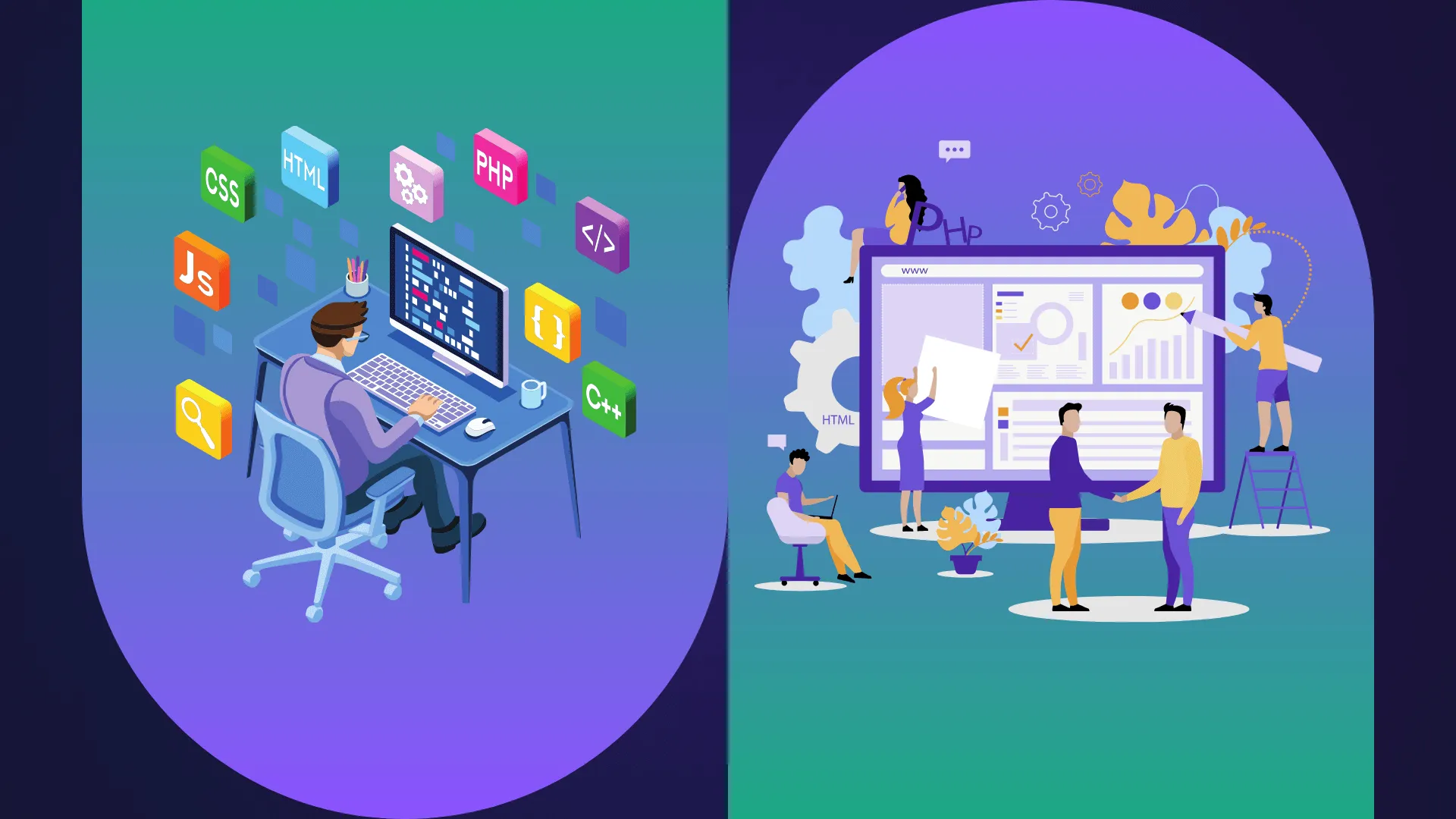
To hire a freelancer OR a company. What to choose?
Whether you're looking for a freelancer or a company to help with your projects, knowing the difference is key.
PWA + AMP: The Future of Fast, Engaging, and Reliable Web Applications
Learn how combining Progressive Web Apps (PWA) and Accelerated Mobile Pages (AMP) can supercharge your mobile website's speed, engagement, and user experience.
Frequently Asked Questions
Our core stack includes React and Next.js for frontends, Node.js and Python for backends, PostgreSQL and MongoDB for databases, and AWS for cloud infrastructure. We also work with Vue, Go, Redis, and other technologies based on project requirements.
Absolutely. We regularly join existing projects, performing a codebase audit first to understand architecture decisions, identify technical debt, and propose improvements. Our developers follow your existing patterns and conventions while gradually improving code quality.
We use daily async standups, weekly video syncs, and sprint demos every two weeks. You get access to our project board for real-time progress tracking. Every sprint ends with a review of delivered features and a plan for the next iteration.
Most projects start with 2-4 full-stack developers plus a tech lead. For larger platforms, we scale to 6-10 developers organized in feature squads. We recommend starting small, validating architecture decisions, then scaling the team as the product matures.
Yes. We offer ongoing maintenance packages that include bug fixes, security updates, performance monitoring, and feature development. Most clients transition from full-time development to a retainer model after launch for continuous improvement.
Ready to Build Your Web Application?
Tell us about your project and we will propose a full-stack team and architecture that fits your timeline and budget.
Contact Us