Infrastructure as Code for Reliable Ops
Stop clicking through consoles and start defining infrastructure in code. InterCode implements IaC practices using Terraform, CloudFormation, and Pulumi that make your environments reproducible, auditable, and deployable in minutes.
Reproducible Infrastructure, Every Time
Manually provisioned infrastructure is fragile, undocumented, and impossible to reproduce reliably. Infrastructure as Code eliminates these problems by defining every server, network, database, and policy in version-controlled configuration files that can be reviewed, tested, and deployed like application code.
InterCode helps organizations adopt IaC using industry-standard tools like Terraform, AWS CDK, and Pulumi. We write modular, reusable infrastructure definitions that provision identical environments for development, staging, and production, eliminating the configuration drift that causes mysterious bugs.
Our IaC implementations integrate with your CI/CD pipelines through GitOps workflows, meaning infrastructure changes go through the same pull request, review, and approval processes as your application code. The result is complete auditability and confidence that what runs in production matches what was approved.
What We Deliver
End-to-end infrastructure as code from design to GitOps automation.
Infrastructure Provisioning
Terraform, CDK, and Pulumi modules that provision cloud resources declaratively and repeatably.
- Modular, reusable configurations
- Multi-cloud support
Environment Parity
Identical dev, staging, and production environments that eliminate works-on-my-machine issues.
- Parameterized environment configs
- Shared module library
Drift Detection
Automated detection and alerting when infrastructure drifts from its defined state.
- Scheduled plan comparisons
- Auto-remediation options
Multi-Cloud Management
Unified IaC that provisions resources across AWS, GCP, and Azure from a single codebase.
- Provider-agnostic modules
- Cross-cloud networking
GitOps Workflows
Infrastructure changes deployed through pull requests with plan previews and approval gates.
- PR-based infrastructure changes
- Automated plan comments
Our IaC Implementation Process
Infrastructure Discovery
We document your existing infrastructure, identify manually provisioned resources, and plan the IaC migration.
- Resource inventory
- Dependency mapping
Module Design
Design reusable IaC modules for your core infrastructure patterns like VPCs, databases, and compute clusters.
- Module interface design
- Variable and output planning
State Migration
Import existing resources into Terraform state without disrupting running services.
- Terraform import workflows
- State file management
Pipeline Integration
Connect IaC to your CI/CD pipelines with plan previews on PRs and automated apply on merge.
- GitOps workflow setup
- Plan output in PR comments
Testing & Validation
Validate IaC with policy-as-code checks and infrastructure tests before applying changes.
- OPA/Sentinel policy checks
- Terratest integration
Infrastructure Discovery
We document your existing infrastructure, identify manually provisioned resources, and plan the IaC migration.
- Resource inventory
- Dependency mapping
Module Design
Design reusable IaC modules for your core infrastructure patterns like VPCs, databases, and compute clusters.
- Module interface design
- Variable and output planning
State Migration
Import existing resources into Terraform state without disrupting running services.
- Terraform import workflows
- State file management
Pipeline Integration
Connect IaC to your CI/CD pipelines with plan previews on PRs and automated apply on merge.
- GitOps workflow setup
- Plan output in PR comments
Testing & Validation
Validate IaC with policy-as-code checks and infrastructure tests before applying changes.
- OPA/Sentinel policy checks
- Terratest integration
IaC Tools We Use
Industry-standard tools for defining and managing infrastructure as code.




Terraform is our default recommendation for multi-cloud flexibility, but we adapt to your team's language preferences with CDK for TypeScript teams or Pulumi for Python and Go shops.
Client Results
Eliminated configuration drift across 12 microservices by moving all infrastructure to Terraform modules.
Reduced new environment provisioning from 2 days to 10 minutes with parameterized Terraform configurations.
Achieved full audit compliance by making every infrastructure change traceable through Git history and PR approvals.
Why InterCode for Infrastructure as Code
Terraform Experts
Our engineers write production-grade Terraform daily, with deep knowledge of state management, modules, and provider internals.
GitOps First
Every IaC project includes a GitOps workflow so infrastructure changes follow the same review process as application code.
Policy as Code
We implement OPA, Sentinel, or custom policies that prevent non-compliant infrastructure from being provisioned.
Modular Architecture
Our IaC modules are designed for reuse across teams and projects, reducing duplication and maintenance overhead.
From Our Blog
Insights and practical guides from our engineering team
Custom Code vs No-Code vs AІ
Of course, we don’t know what is best for you in your specific case. But we know for sure that the best solution for us is Custom сode.
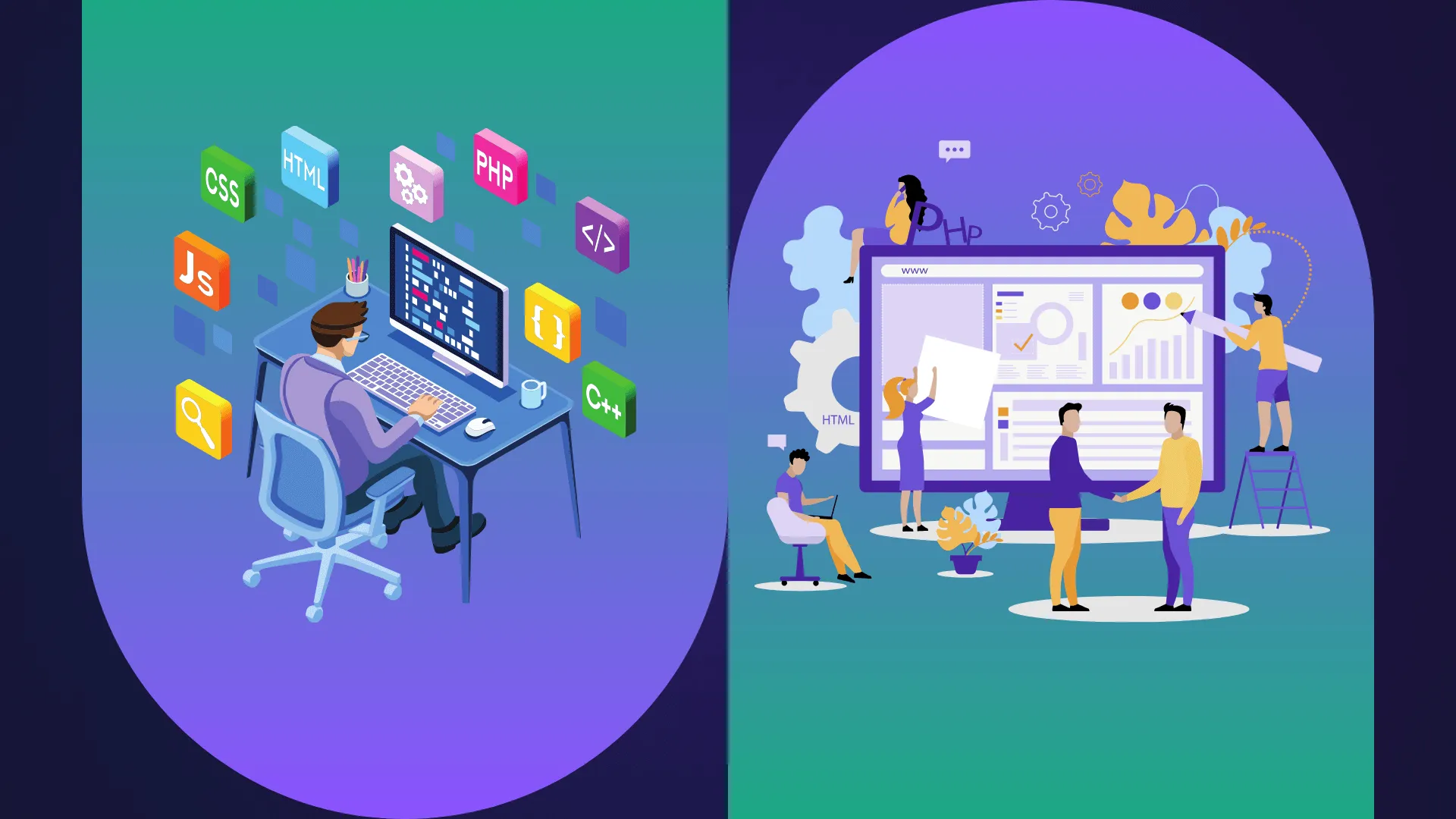
To hire a freelancer OR a company. What to choose?
Whether you're looking for a freelancer or a company to help with your projects, knowing the difference is key.
PWA + AMP: The Future of Fast, Engaging, and Reliable Web Applications
Learn how combining Progressive Web Apps (PWA) and Accelerated Mobile Pages (AMP) can supercharge your mobile website's speed, engagement, and user experience.
Frequently Asked Questions
Terraform is our default recommendation for most teams due to its multi-cloud support, large ecosystem, and mature state management. If your team works primarily in TypeScript, AWS CDK is a strong choice. For teams that prefer Python or Go, Pulumi offers a great developer experience. We help you evaluate based on your specific context.
Yes. We use Terraform import and tools like Terraformer to bring existing cloud resources under IaC management without disrupting running services. This is a common first step in our IaC engagements.
We configure remote state backends using S3 with DynamoDB locking, Terraform Cloud, or equivalent solutions. State is encrypted, access-controlled, and backed up automatically. We also implement state file organization strategies for large infrastructures.
We implement infrastructure testing using Terratest for integration tests, policy-as-code tools for compliance checks, and plan validation in CI pipelines. Every infrastructure change is tested before it reaches production.
A small environment with a handful of services can be migrated in 2-3 weeks. Larger infrastructures with dozens of services typically take 6-10 weeks. We prioritize critical infrastructure first and migrate incrementally to minimize risk.
Ready to Codify Your Infrastructure?
Tell us about your current infrastructure and we will design an IaC strategy that brings consistency, speed, and auditability to your operations.
Contact Us