Modernize Legacy Systems Without the Risk
Aging technology does not have to hold your business back. InterCode modernizes legacy systems incrementally, migrating monoliths to microservices, upgrading tech stacks, and moving to the cloud without disrupting your operations.
Incremental Modernization That Delivers Results
Legacy systems are expensive to maintain, difficult to extend, and increasingly risky as security vulnerabilities accumulate. But ripping and replacing an entire platform is even riskier. InterCode specializes in incremental modernization strategies that reduce risk while delivering value at every stage.
We use proven patterns like the strangler fig to gradually extract functionality from monoliths into modern, independently deployable services. Each migrated component is tested and validated before the legacy equivalent is retired, ensuring zero disruption to your business operations.
Our modernization roadmaps are pragmatic. We prioritize the components that deliver the highest ROI first, whether that means better developer productivity, reduced infrastructure costs, or improved user experience. The result is a modern, cloud-native architecture that your team can extend confidently for years to come.
What We Deliver
Comprehensive modernization services that transform legacy systems into modern platforms.
Architecture Assessment
Comprehensive analysis of your current system to identify technical debt, risks, and modernization priorities.
- Dependency mapping
- Risk and complexity scoring
Strangler Fig Migration
Gradually replace monolith components with modern services while keeping the system running.
- Parallel old and new systems
- Zero-downtime cutover
Database Modernization
Migrate from legacy databases to modern platforms with full data integrity and zero data loss.
- Schema redesign and optimization
- Incremental migration tooling
API-First Refactoring
Expose legacy functionality through clean APIs before replacing the underlying implementation.
- API facade over legacy code
- Consumer-driven contracts
Cloud-Native Transformation
Re-platform applications for cloud deployment with containers, orchestration, and auto-scaling.
- Docker and Kubernetes migration
- Infrastructure as code
Modernization Process
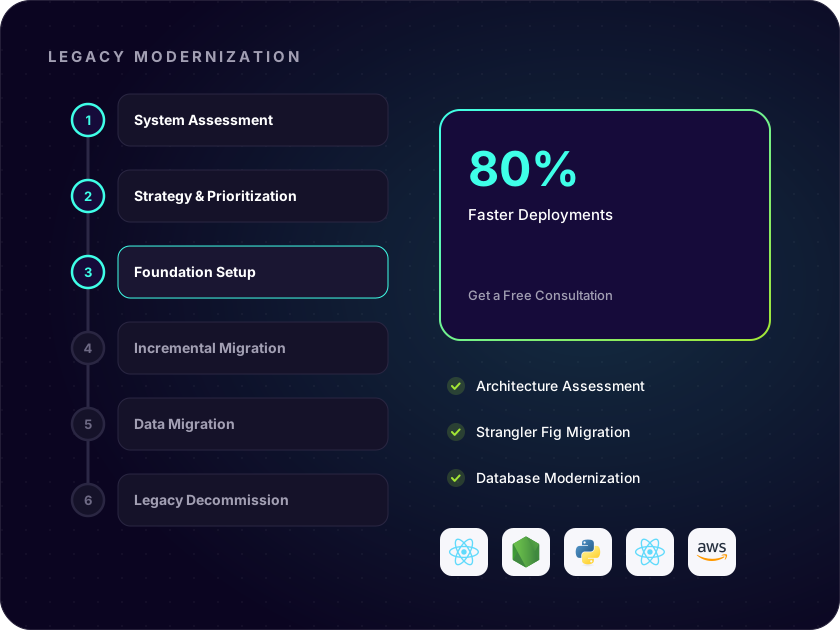
System Assessment
We analyze your legacy system's architecture, dependencies, and technical debt to create a modernization roadmap.
- Codebase and infrastructure audit
- Business criticality mapping
Strategy & Prioritization
We define the modernization approach and prioritize components by business value and risk.
- ROI-driven prioritization
- Risk mitigation plan
Foundation Setup
CI/CD pipelines, containerization, and API gateways are established as the modern infrastructure base.
- Container orchestration setup
- Automated testing framework
Incremental Migration
Components are extracted from the monolith, rebuilt as modern services, and deployed alongside the legacy system.
- Feature flag controlled rollout
- A/B testing old vs. new
Data Migration
Database schemas are modernized and data is migrated with validation at every step.
- Dual-write during transition
- Rollback capability
Legacy Decommission
Once all components are migrated and validated, the legacy system is safely retired.
- Gradual traffic shifting
- Monitoring and rollback readiness
System Assessment
We analyze your legacy system's architecture, dependencies, and technical debt to create a modernization roadmap.
- Codebase and infrastructure audit
- Business criticality mapping
Strategy & Prioritization
We define the modernization approach and prioritize components by business value and risk.
- ROI-driven prioritization
- Risk mitigation plan
Foundation Setup
CI/CD pipelines, containerization, and API gateways are established as the modern infrastructure base.
- Container orchestration setup
- Automated testing framework
Incremental Migration
Components are extracted from the monolith, rebuilt as modern services, and deployed alongside the legacy system.
- Feature flag controlled rollout
- A/B testing old vs. new
Data Migration
Database schemas are modernized and data is migrated with validation at every step.
- Dual-write during transition
- Rollback capability
Legacy Decommission
Once all components are migrated and validated, the legacy system is safely retired.
- Gradual traffic shifting
- Monitoring and rollback readiness
Modernization Technology Stack
Modern technologies that replace legacy constraints with scalability and developer productivity.










Our modernization stack combines cloud-native infrastructure with modern development frameworks, enabling incremental migration with full CI/CD automation and infrastructure-as-code practices.
Why InterCode for Legacy Modernization
Zero-Disruption Migration
Our incremental approach ensures your business never stops running during the modernization process.
Pragmatic Roadmaps
We prioritize based on business value, not technical purity. You see ROI at every stage of the migration.
Proven Migration Patterns
Strangler fig, branch by abstraction, and event-driven decomposition patterns refined across dozens of projects.
Knowledge Transfer
Your team is trained on the new architecture and tools so they can maintain and extend the system independently.
Measurable Outcomes
Every phase has defined metrics for deployment speed, infrastructure costs, and developer productivity.
From Our Blog
Insights and practical guides from our engineering team
Custom Code vs No-Code vs AІ
Of course, we don’t know what is best for you in your specific case. But we know for sure that the best solution for us is Custom сode.
To hire a freelancer OR a company. What to choose?
Whether you're looking for a freelancer or a company to help with your projects, knowing the difference is key.

How to Monetize Your SaaS Application: Pricing Models and Strategies for Success
Learn how to maximize revenue and build a loyal user base for your SaaS, including value-based pricing tiers. Start optimizing your SaaS now!
Frequently Asked Questions
It depends on the system's size and complexity. A focused modernization of a single monolith component typically takes 2-3 months. A full system modernization usually spans 6-18 months with incremental value delivered every sprint. We always start with a 4-6 week assessment phase.
Yes, that is fundamental to our approach. The strangler fig pattern runs old and new systems in parallel. Traffic is gradually shifted to new services as they are validated. The legacy system is only decommissioned after all functionality is migrated and tested.
This is common. Our assessment phase includes reverse engineering the existing system through code analysis, database inspection, and stakeholder interviews. We create the documentation that should have existed as part of the modernization process.
We include knowledge transfer as part of every modernization project. Training covers the new architecture, deployment processes, monitoring tools, and development workflows. Most teams become fully autonomous within 2-3 months of working alongside our engineers.
We use incremental migration with dual-write capabilities. New services write to both old and new databases during the transition. Data validation tools verify consistency at every step, and rollback procedures are always in place. We never do a big-bang data migration.
Ready to Modernize Your Legacy Systems?
Share details about your legacy system and we will create a practical modernization roadmap with clear ROI milestones.
Contact Us