 ServiceCODE FACTORY
AI Software Factory Integration
We plug our Code Factory, a ticket board and a team of Claude coding agents, into your development process. Agents take tickets, open reviewed pull requests and spin up previews. Your engineers merge. Expect 24 well-scoped pull requests in the first two weeks.
How the Code Factory Plugs Into Your Development Process
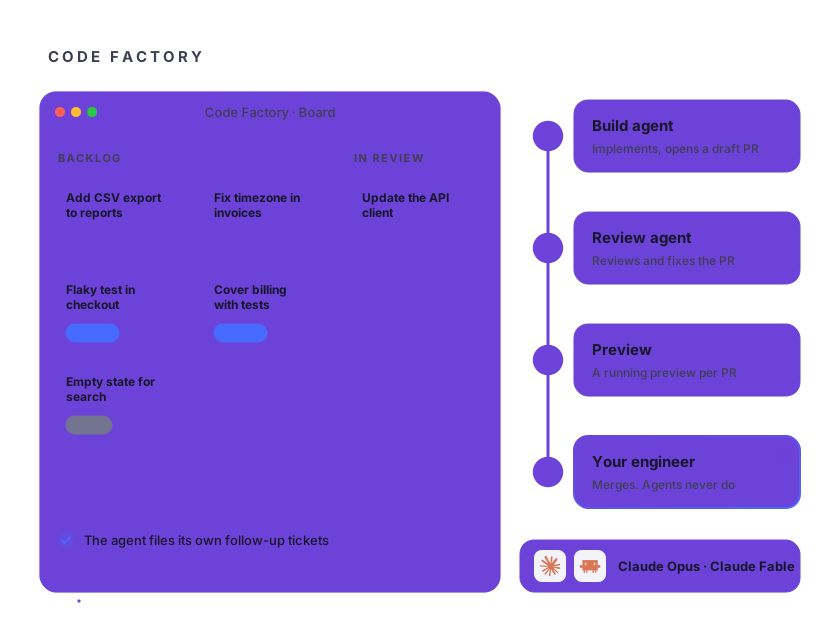
AI software factory integration connects InterCode's Code Factory to the way your team already ships. Tickets come from three places: your developers and ours, the agent itself, which files follow-up tickets for what it notices while it works, and, if you want, your business team. A Build agent implements each ticket and opens a draft pull request, a Review agent checks and fixes it, and every pull request gets a preview environment. Only your engineers can merge.
On one of our projects the agent opened 38 pull requests in five weeks; 36 were merged, none were abandoned, and the median pull request went from opened to merged in under 2 working hours. InterCode is an Anthropic partner, and the agents run on the latest Claude models, Claude Opus and Claude Fable, in our infrastructure or yours.
Agentic Software Development With Guardrails
A board, autonomous coding agents and the controls around them, set up in your repositories, CI and tracker.
Ticket Board for People and Agents
One board where your developers and ours, the agent and, optionally, your business team file tickets. The agent turns what it notices while working into follow-up tickets, so the backlog improves itself.
Build Agent
Claims a ticket, plans the change, implements it against your conventions and tests, and opens a draft pull request with a clear description.
Review Agent
An AI code review agent reviews every pull request at a set depth, fixes what it finds and only then marks it ready, so your engineers review a cleaned-up change.
Revision Agent
Mention @agent on an open pull request and the Revision agent addresses the comment, re-runs the review and pushes the update.
Preview Environment per Pull Request
Every pull request gets its own running preview on demo data, so product people can click through a change before it is merged. Previews are removed when the PR closes.
Human Merge and Protected Paths
Agents never merge. Pull requests that touch secrets, tokens or merge logic are refused outright, and tickets with sensitive data run only under an admin.
See the Coding Agents at Work
Autonomous coding agents with one job each: the Build agent writes the change, the Review agent checks it, the Revision agent answers your comments, and a person merges.
# new ticketsIMP-6 searchable member picker [dev]IMP-21 weekly reminder email [dev]IMP-85 notify admins on follow-ups [agent]IMP-67 keep picked dates in dialog [team]✓ 4 tickets queued for the Build agent
$ claim IMP-6reading CLAUDE.md, conventions, tests …plan 2 files: MemberPicker.tsx, TimesheetDialog.tsx$ pnpm test ✓ 214 passed$ git push agent/imp-6✓ draft PR #182 opened · summary written
review depth standard! MemberPicker.tsx:42 re-renders on every keystroke! missing test for an empty searchfixing … memoised filter, added test✓ 2 findings · 2 fixed✓ marked ready for review
@dev: @agent keep the toggle in the top row on phones👀 reactedediting PeopleHeader.tsx✓ pushed 3f9c2e1✓ review re-run: clean
● preview-pr-182 live in 4 min (demo data)checks lint ✓ unit ✓ e2e ✓ review ✓merge agent: not allowedmerge engineer: ✓ mergedpreview torn down
AI Software Factory Results on a Live Project
InterCode sets up Code Factories across its projects. The figures here come from one of them: a production web platform with real users, CI, tests and an active backlog. Autonomous coding agents worked next to the engineering team exactly the way they would work in yours.
Developers filed tickets on the board, and the agent filed its own follow-ups. Every change went through the Build agent, the AI code review agent and a preview environment, and an engineer decided whether to merge it.
Over five weeks the agent opened 38 pull requests. 36 of them were merged (95%) and none were abandoned; the other two are still in review. In the same five weeks 91 pull requests were merged on the project in total, so the agent wrote about 40% of everything that shipped, and our engineers wrote the other 55. It was ordinary product work: searchable pickers, shared calendar views, notification emails, mobile layout fixes and improvements to the factory itself. A typical pull request touched five or six files and about 330 lines.
The median pull request went from opened to merged in under 2 working hours. In the first two weeks after the factory was connected, the agent opened 24 pull requests and 21 were merged. That is where our offer comes from: 24 pull requests in your first two weeks.
One project. Results depend on your codebase, tests and backlog; the factory audit shows what to expect before you commit.
- 38
- pull requests opened by the agent in five weeks on one of our projects
- 36
- merged into the product: 95% of the agent's pull requests
- 0
- abandoned; the other 2 are still in review
- < 2 h
- median from opened to merged, in working hours
| Metric | Result |
|---|---|
| Measured period | 5 weeks |
| Pull requests opened by the agent | 38 |
| Agent pull requests merged | 36 of 38 (95%) |
| Abandoned | 0 (2 still in review) |
| Agent's share of all pull requests merged on the project | ≈40% (36 of 91; the other 55 by our engineers) |
| Median time from opened to merged | under 2 working hours |
| First two weeks after connecting the factory | 24 opened, 21 merged |
| Typical pull request | 5–6 files, about 330 lines |
From Audit to 24 Pull Requests in Two Weeks
This is how we work with your team: a factory audit, the factory connected to your tools, and 24 reviewed pull requests on your own tickets in your first two weeks. Then you decide whether we scale it or hand it over.
- Step 1 · days 1–3
Factory Audit
We look at your repositories, CI, test coverage and backlog, and agree which kinds of tickets the agents take first and which stay with your engineers.
- · Repository and CI review
- · Backlog triage
- · Rules and protected paths agreed
- Step 2 · days 3–5
Connect the Factory
We connect the board, the agents and preview environments to your Git host, tracker and CI, in our infrastructure or in yours, and tune the agents to your conventions.
- · GitHub, GitLab or Bitbucket
- · Jira, Linear or GitHub Issues
- · Our cloud or your cluster
- Step 3 · weeks 1–2
First Two Weeks: 24 Pull Requests
The agents work your real tickets. You get 24 well-scoped, reviewed pull requests that the product needs, each with a preview, merged by your engineers.
- · Real tickets, not demos
- · Every PR reviewed and previewed
- · Weekly results review
- Step 4 · after week 2
Scale or Hand Over
We roll the factory out to more teams and repositories and keep running it, or hand it over with documentation so your team owns it.
- · More teams and repositories
- · Managed run or hand-over
- · Cost and quality reporting
AI Agents for Software Development, Wired Into Your Stack
We support the tools your team already uses: every major Git host and tracker, in our infrastructure or yours.
 Claude Opus & Claude Fable
 Claude Code
 GitHub
 GitLab
 Bitbucket
 Jira
 Linear
 Kubernetes
The agents run on the latest Claude models, Claude Opus and Claude Fable, chosen per agent: the strongest model for the Build agent, a lighter one where a review or a revision is enough. The factory runs in our infrastructure or in your own cluster, and model usage is billed directly by the provider.
Why InterCode for AI Software Factory Integration
Anthropic Partner
InterCode is an Anthropic partner, a Claude Certified Services Partner. Our engineers build with Claude Code and the Claude API every day.
Proven on Our Own Projects
We run Code Factories on our own projects. On one of them the agent opened 38 pull requests in five weeks: 36 merged, none abandoned.
Your Team Stays in Control
Agents open pull requests; only your engineers merge. Protected paths, role-based access and run logs are part of every setup.
Our Infrastructure or Yours
Run the factory with us, or inside your own cluster so code and data never leave your environment.
Who AI Software Factory Integration Fits
It pays off fastest where there is a real backlog, CI and tests. Architecture, auth, billing and production data migrations stay with your engineers.
| Client Profile | Core Challenges Solved | Typical Engagement Scope |
|---|---|---|
| Product companies with a growing backlog | Small, well-defined tickets wait weeks because engineers are on bigger work | Agents take features against a spec, UI changes, bug fixes with a reproduction and test coverage |
| Teams already using Claude Code, Cursor or Copilot | AI helps each developer, but every change still needs a person to drive it from ticket to PR | Board, Build and Review agents, previews and merge rules, so tickets move without a driver |
| CTOs scaling delivery without hiring | Hiring is slow and review is the bottleneck | Factory rollout across teams, with review agents in front of human review and cost reporting |
Further Reading on Software Factories and Agentic Development
Insights and practical guides from our engineering team
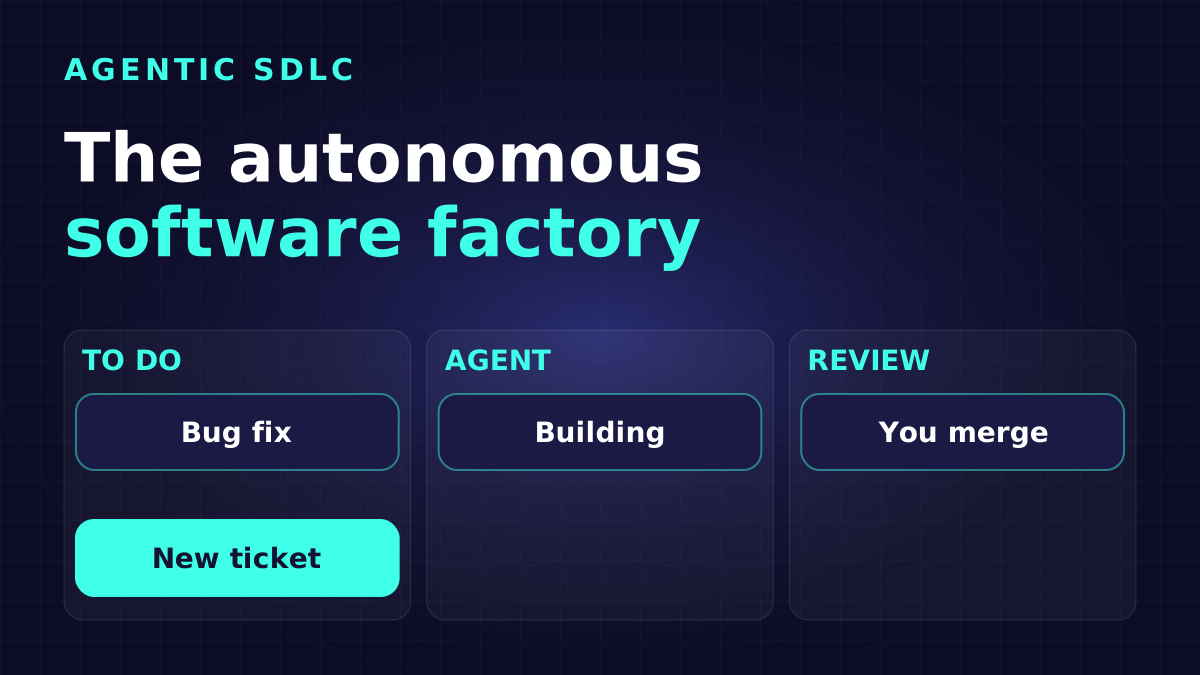
Operating the Autonomous Software Factory: Scaling Enterprise SDLC in 2027
Executive guidance on AI software factory, autonomous code delivery, multi-agent engineering cost modeling, and agentic SDLC governance. Read now!
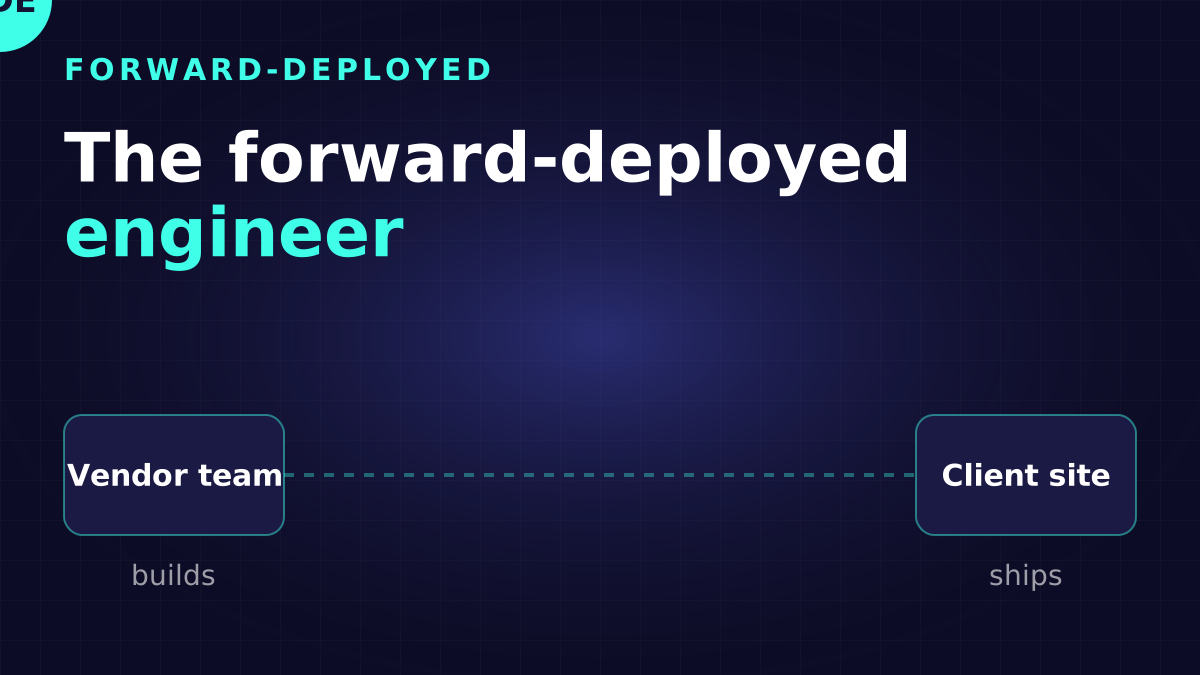
What Is a Forward-Deployed Engineer and When to Hire One?
What is a forward-deployed engineer? Learn the role, salary ranges ($189K–$550K+), how it differs from a solutions engineer, and when startups should hire one.
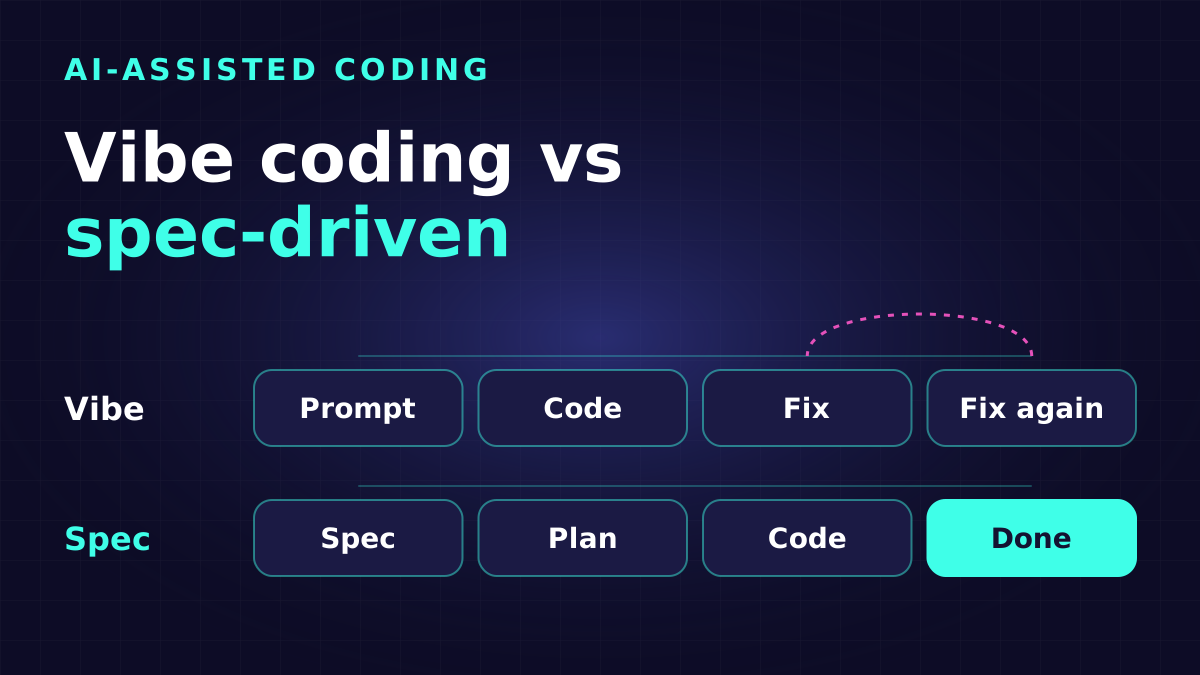
Vibe Coding vs. Spec-Driven Development: The Future of AI-Assisted Software Engineering in 2026
Discover why the software engineering industry is shifting from iterative "vibe coding" to structured spec-driven development for AI-assisted coding in 2026.
Frequently Asked Questions
An AI software factory is a repeatable setup in which coding agents take tickets, implement them, open pull requests and get them reviewed, while people decide what gets merged. Our blog explains <a href="/blog/ai-software-factory-agentic-sdlc">what a software factory is and how the agentic SDLC works</a> in detail.
The audit and connection take the first days of the engagement. In the first two weeks the agents work your real tickets and deliver 24 well-scoped, reviewed pull requests, each with a preview environment, merged by your engineers. Rollout to more teams follows.
Your developers and ours file them on the board. The agent also creates tickets itself: when it notices a bug, missing test or follow-up while working, it files it, so the backlog keeps improving. Your business team can file tickets too if you want.
Features against a clear spec, UI changes, bug fixes with a reproduction, test coverage, dependency updates and configuration changes. Architecture changes, authentication, billing and production data migrations stay with your engineers. We agree the split in the audit.
On one of our projects the agent opened 38 pull requests in five weeks; 36 were merged, none were abandoned, and the median pull request went from opened to merged in under 2 working hours. In the first two weeks after the factory was connected it opened 24 pull requests, which is where our offer of 24 pull requests in your first two weeks comes from.
Your engineers, always. Agents open and review pull requests but cannot merge. Changes that touch secrets, tokens or merge logic are refused outright, and tickets involving sensitive data run only under an admin.
The agents run on the latest Claude models, Claude Opus and Claude Fable. InterCode is an Anthropic partner. The factory can run in our infrastructure or inside your own cluster, so code and data stay in your environment if you need that.
No. We support GitHub, GitLab and Bitbucket, Jira, Linear and GitHub Issues, and connect to the CI you already run. The agents follow your conventions and must pass your checks.
It depends on the number of repositories, teams and the tickets you want the agents to take. We price each factory on a short call after looking at your repository and backlog. Model usage is billed separately, directly by the provider.
Ready to Put an AI Software Factory to Work?
Book a factory audit. We review your repository and backlog, show which tickets the agents can take, and plan your first two weeks and 24 pull requests.
Contact Us