Agentic Advertising: What It Takes to Build an Agent That Runs Campaigns End to End
Agentic advertising means handing a campaign goal to software that plans, builds, launches, and adjusts the campaign autonomously, rather than executing static rules written by a marketer in advance. For a marketing agency, martech vendor, or vertical SaaS platform, the central commercial decision is whether to subscribe to a third-party platform or build a proprietary agent into the product the business already sells. Across custom deployments built by InterCode for marketing businesses, an AI booking multi-agent chatbot for Billboards America cut campaign creation from 45 minutes to 10 minutes and lifted lead conversion from 15–20% to 35–45%. Another project was a multi-agent acquisition system for Street Digital that reduced manual prospect research by 73% and expanded outbound capacity 3.2x. Typical production builds require 3 to 5 specialists across 6 to 14 weeks.
Across the marketing services and software sector, enterprise clients are demanding artificial intelligence capabilities, direct competitors are announcing autonomous campaign features, and managing directors are forced to evaluate a fundamental commercial trade-off. The trade-off does not revolve around defining autonomous software, which the trade press has covered extensively over the past year. Instead, owners and commercial leads at digital agencies, recruitment advertising firms, and vertical SaaS platforms face a capital allocation question: whether to rent and resell an off-the-shelf vendor platform or engineer a proprietary agent directly into the software and service stack the business already owns.
What Agentic Advertising Means and the Line That Matters
Establishing a precise operational boundary prevents you from overpaying for conventional scripts repackaged under new terminology. Traditional marketing automation follows pre-written rules, whereas agentic marketing pursues assigned goals. In a standard marketing automation environment, a human marketer maps out a rigid decision tree in advance. If a prospect views a pricing page, wait 24 hours, send email variant A, and if opened, assign lead score X. Every branch of that workflow represents a conditional path a human operator anticipated and hard-coded before launch.
An agentic system removes the human operator from the branching logic. Instead of programming step-by-step pathways, the operator defines an objective alongside strict budget, compliance, and brand safety guardrails. Within those boundaries, the software independently selects the audience segments, assembles creative variations, allocates bids, and modifies pacing as live market signals shift.
| System Category | Human Operator Role | Software System Decisions | Execution Autonomy | Primary Commercial Limitation |
| Standard AI Marketing Tools | Drives software directly; inputs prompts, exports files, and configures campaign settings manually. | Generates isolated text, analytics summaries, or single-task outputs upon explicit human command. | None; purely assistive task execution. | Saves individual task minutes but leaves cross-channel workflow bottlenecks intact. |
| AI Ad Makers | Writes creative briefs, prompts generative models, selects winning variants, and traffics ads into ad managers. | Synthesises visual variations, headlines, and placement formats based on prompt parameters. | Low; automates asset production without live performance feedback. | Produces creative volume without connecting asset selection to live conversion or pipeline data. |
| AI Marketing Agents | Sets the commercial goal, establishes budget and brand-safety guardrails, and audits outcomes. | Conducts competitive research, segments audiences, deploys creative, adjusts bids, and shifts channel spend. | High; continuous closed-loop operation within human-defined boundaries. | Requires unified first-party data, multi-tenant isolation, and dedicated supervisory governance. |
Where agentic AI advertising lands across 4 agency functions
American Association of Advertising Agencies (4A's) maps the operational impact of agentic AI advertising across 4 core agency functions:
Media and performance optimisation
Creative operations
Account management
Strategy and intelligence
While trade associations frame these 4 pillars as future workforce predictions, InterCode's engineering delivery across 4 marketing and customer engagement businesses demonstrates how autonomous agents operate inside each function in production today.
Media and performance optimisation
In media operations and AI media buying, human planners traditionally spend hours pulling cross-channel pacing reports, reconciling attribution discrepancies, and manually configuring campaign shells across search and paid social networks. 2 separate production deployments engineered by InterCode demonstrate how campaign automation and AI-powered business intelligence operate as distinct systems in practice:
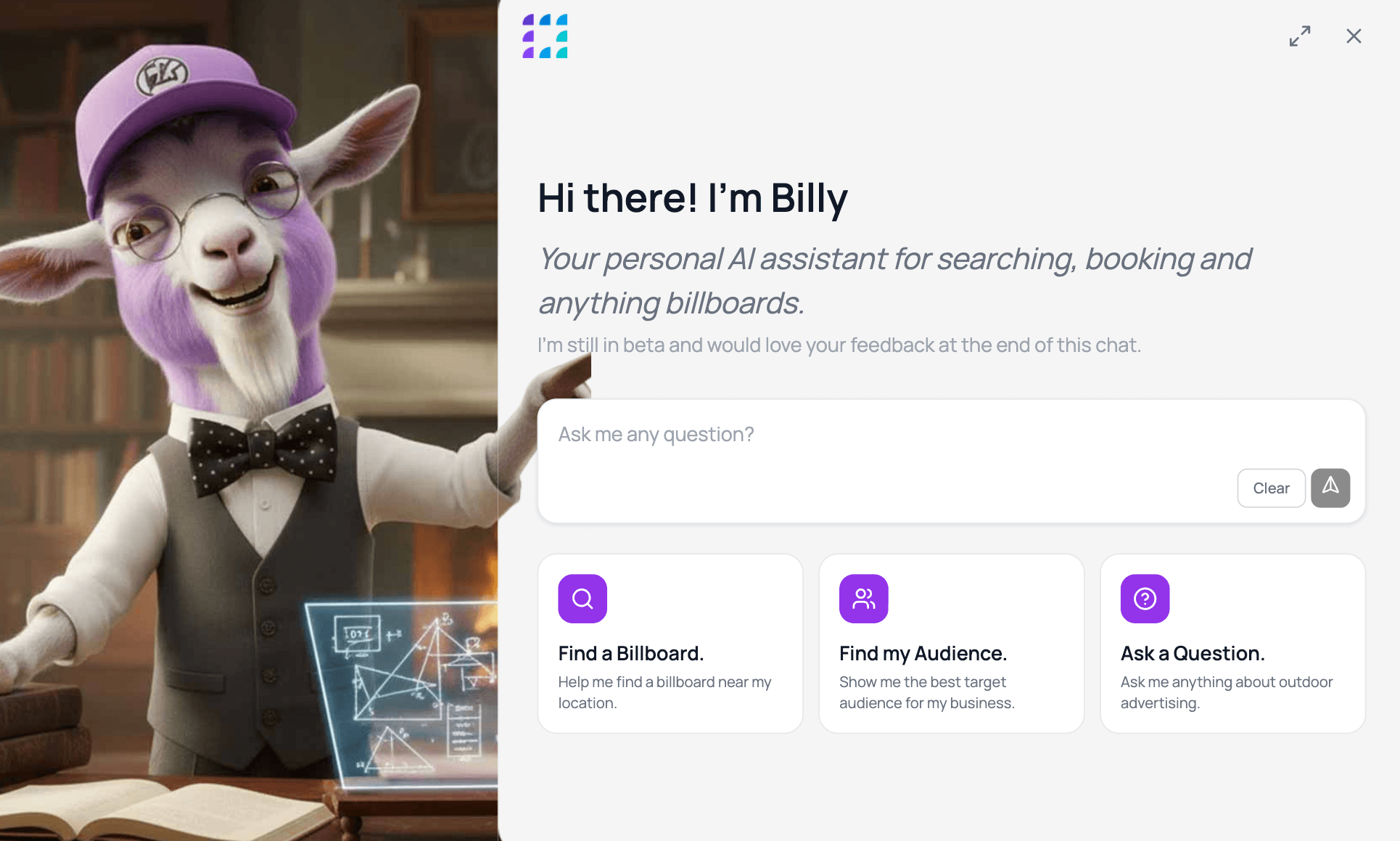
AI booking multi-agent chatbot for USA outdoor advertising. For outdoor advertising provider Billboards America, InterCode built an AI booking multi-agent chatbot that automates client consultations and campaign setup end to end. By replacing manual inventory lookup and booking configuration, the multi-agent system cut campaign creation from 45 minutes to 10 minutes (4.5x), lifted lead conversion rates from 15–20% to 35–45% (2.2x), and expanded consultation automation from 0% to 70%.
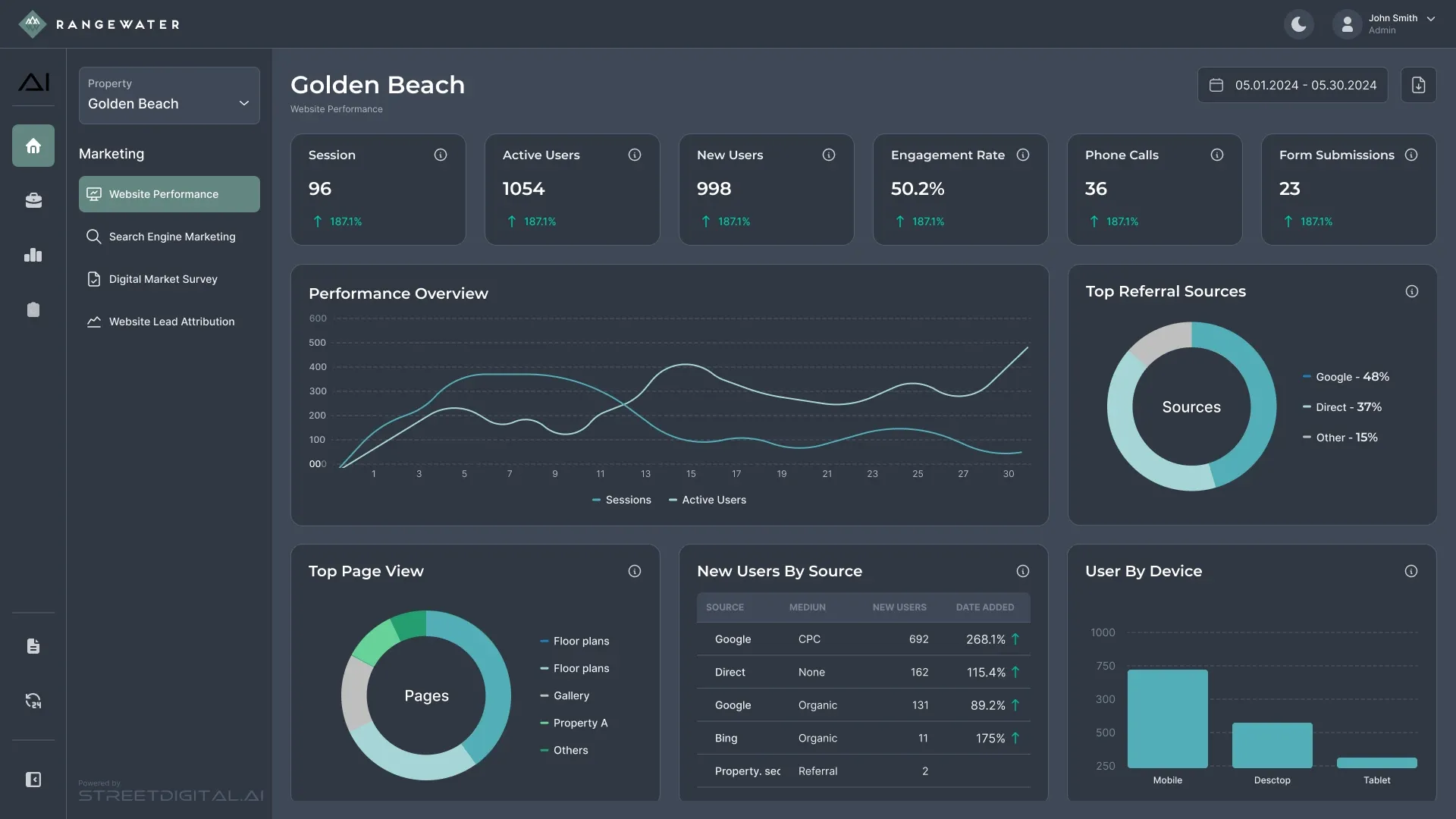
AI-powered BI software and marketing automation powered by Anthropic's Claude. In a separate analytics deployment for multifamily digital marketing agency Street Digital, InterCode engineered an AI-powered business intelligence platform built with Anthropic's Claude. Replacing a legacy no-code reporting setup, the platform reduced dashboard load times from over 30 seconds to under 3 seconds, cut platform costs by 75% compared with the old no-code tool, and delivered 99.9% uptime with real-time data.
If you are interested in pricing for AI agents, you can read our guide on AI agent development cost.
Creative operations
Creative operations inside high-volume agencies frequently stall during version adaptation and downstream trafficking.
In the social recruitment advertising sector, Adway serves more than 300 global enterprises by automating the translation of open job requisitions and employer-brand materials into targeted social ad campaigns. Rather than relying on production designers to resize assets and copywriters to rewrite job descriptions for every social feed and story format, automated workflows adapt creative per placement and wire in-feed candidate applications directly into each enterprise client's Applicant Tracking System (ATS).
Account management and client experience
Account management and client-facing responsiveness determine retention for both agencies and vertical marketing platforms, particularly when end-customer enquiries arrive outside standard business hours.
Respage, a multifamily leasing and marketing platform, embedded a proprietary AI Leasing Agent directly into its software product after operational records showed that the majority of prospective tenants submit enquiries after 5:00 PM asking straightforward property questions. In production, Respage's agent autonomously resolves 62% of first-touch tenant enquiries without human intervention, capturing high-intent leads that would otherwise go unanswered until the following morning.
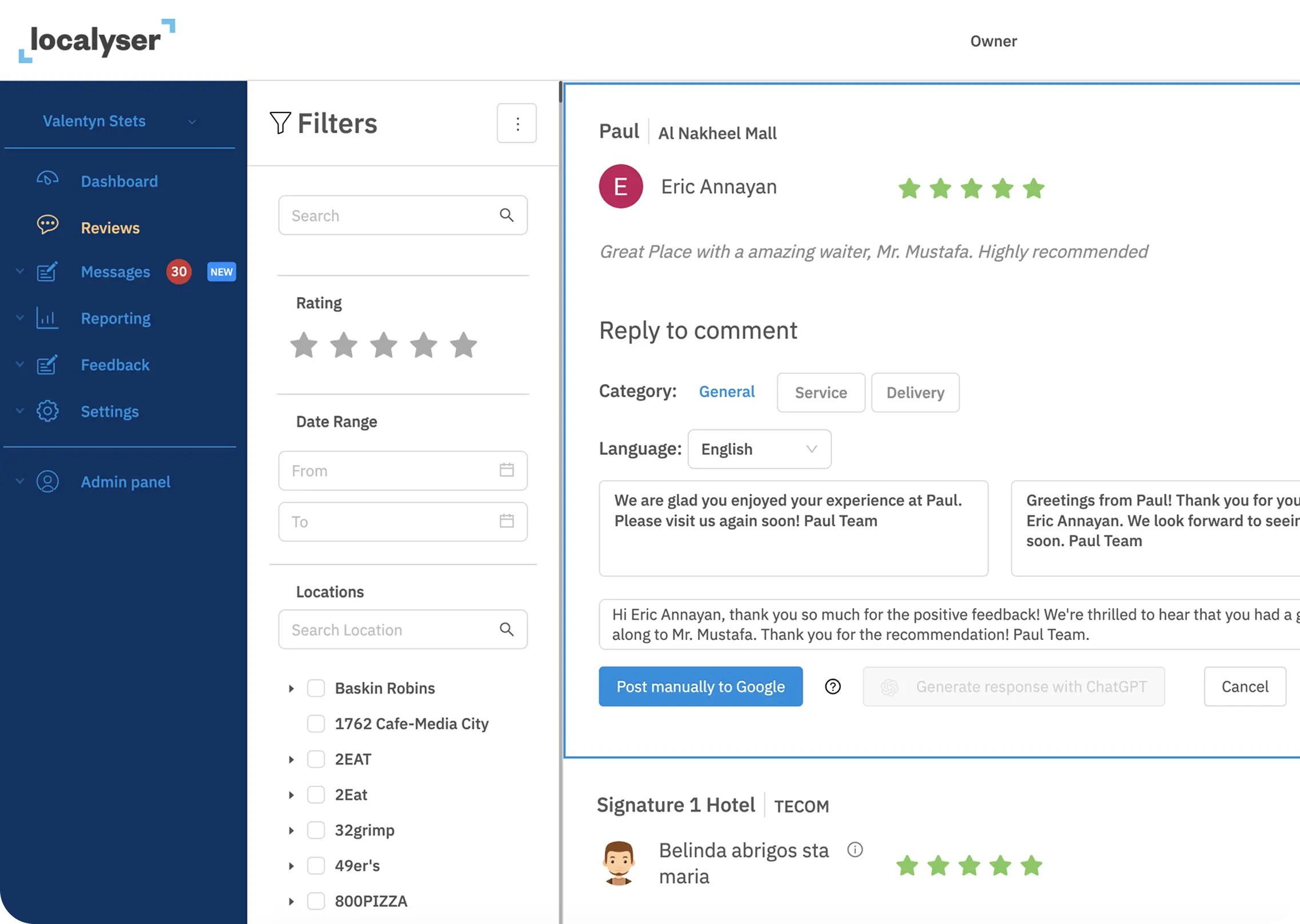
Similarly, guest experience and reputation SaaS platform Localyser deployed an autonomous triage and response agent across 1,200 client locations. The system performs sentiment analysis, drafts on-brand replies, and escalates critical incidents to regional managers, cutting average response times from 18 hours to 4 minutes and deflecting approximately 1,100 hours of manual monthly triage.
Strategy and competitive intelligence
Strategy and market intelligence functions often suffer from manual data gathering that restricts how many accounts a commercial team can pursue.
Street Digital, a multifamily digital marketing agency operating its own proprietary "Apartment Intelligence" software platform, commissioned a multi-agent customer acquisition system to automate prospect research and outbound preparation. Street Digital reduced manual prospect research time by 73% and expanded outbound capacity by 3.2x with zero additional hires. Within 5 months of deployment, the system generated over $320,000 in new enterprise pipeline and achieved an annualised ROI exceeding 3.5x.
What running campaigns end to end actually looks like in agentic marketing
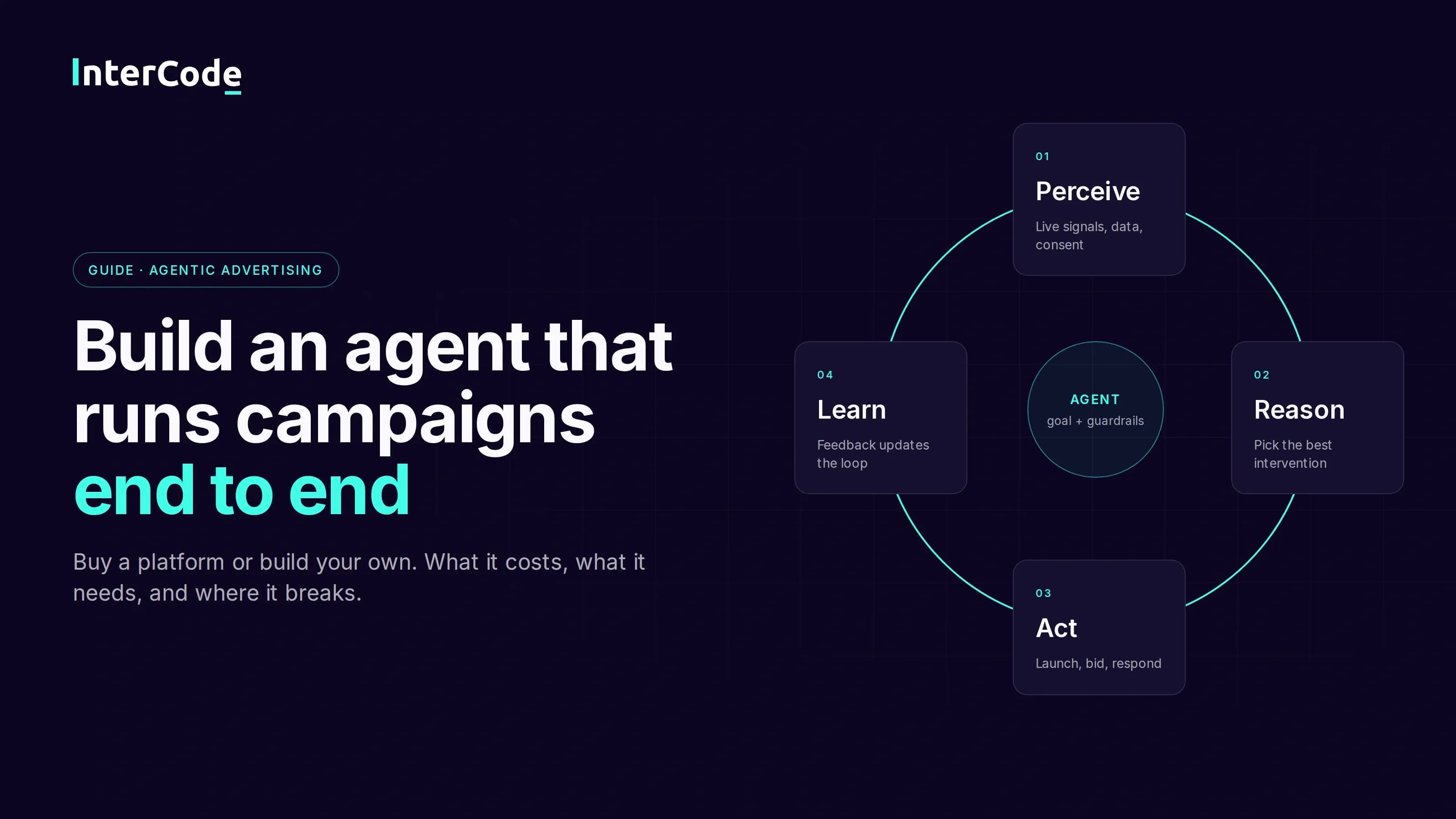
Understanding how a system achieves these operational gains requires examining the runtime mechanics of agentic marketing. We define the core engine of an autonomous marketing system as a continuous 4-step cycle:
Perceive. Unlike legacy batch processing, the "perceive" stage operates as a live stream. The agent continuously ingests behavioural signals, purchase histories, inventory or catalogue states, channel engagement metrics, and customer consent statuses in real time.
Reason. During the "reason" stage, the system evaluates those live signals against the overarching commercial goal and active guardrails. It determines which intervention holds the highest expected value.
Act. In the "act" stage, the agent executes that intervention across the appropriate channel—launching a campaign shell, adjusting bid allocations, or dispatching a personalised response.
Learn. Finally, in the "learn" stage, the system captures conversion or engagement feedback from that action and updates its internal parameters before the next cycle begins.
We think that our article “Operating the Autonomous Software Factory: Scaling Enterprise SDLC in 2027” will be very interesting for you.
Buying a Platform Versus Building an Agent Into an Agency Product
| Commercial Dimension | Brand Licensing a Vendor Platform | Marketing Business Licensing a Vendor Platform | Marketing Business Building a Proprietary Agent |
| Core Asset Acquired | Internal marketing execution capability for a single brand. | Resold capability that any competing agency can license immediately. | Proprietary software feature embedded inside the agency's own product. |
| Cost Structure | Platform subscription plus a percentage of managed ad spend. | Platform subscription plus ongoing share of client media spend paid to vendor. | Fixed engineering build with zero spend-linked vendor tax. |
| Impact on 8k-25k Monthly Retainers | Reduces reliance on external agency execution retainers. | Compresses agency gross margin as execution fees fall while vendor fees persist. | Protects agency margin. |
| Data Ownership & Moat | Brand's first-party data improves vendor's shared platform heuristics. | Client campaign telemetry resides inside a third-party vendor's environment. | Runs on proprietary client data with strict multi-tenant isolation. |
| Enterprise Valuation Impact | Operational expense; zero impact on software multiple. | Service reseller model; low defensibility during client renewals. | Proprietary IP asset integrated into the platform. |
When a managing director evaluates how to bring these capabilities into a marketing business, the financial and strategic calculus diverges sharply from that of a consumer brand. A brand purchasing a licence to an off-the-shelf agentic platform acquires an internal efficiency tool. A marketing agency purchasing that exact same platform acquires an undifferentiated tool that every competing agency in its vertical can rent on identical terms, while the vendor captures an ongoing share of client media spend or seat licensing revenue.
Conversely, a marketing business that builds a proprietary agent embeds a permanent capital asset inside its own product that competitors cannot buy off the shelf.
What 4 real builds cost and delivered for marketing businesses
While industry reports and vendor blogs debate the theoretical potential of autonomous marketing, commercial leaders require audited delivery figures to construct a capital business case. The figures below are drawn directly from 4 production engineering engagements delivered by InterCode for marketing agencies, martech platforms, and customer experience SaaS businesses.
| Client & Vertical | Agent Architecture & Core Task | Engineering Team Composition | Delivery Timeline | Verified Commercial Outcomes |
| Billboards America (Outdoor Advertising) | AI booking multi-agent chatbot | - | - | Campaign creation cut from 45 min to 10 min (4.5x); lead conversion rate lifted from 15–20% to 35–45% (2.2x); consultation automation increased from 0% to 70%. |
| Street Digital (Multifamily Marketing Agency) | Multi-agent customer acquisition integrated into "Apartment Intelligence" software. | 2 AI devs, 1 backend engineer, 0.5 PM, 0.5 QA (4.0 FTEs). | 10 weeks. | Manual prospect research -73%; outbound capacity 3.2x with zero new hires; >$320,000 enterprise pipeline in 5 months; >3.5x annualised ROI. |
| Respage (Multifamily Leasing & Marketing Platform) | Multi-tenant AI Leasing Agent embedded inside core SaaS product. | 2 AI engineers, 1 full-stack dev, 1 MLOps, 1 PM (5.0 FTEs). | 14 weeks. | 62% of first-touch tenant enquiries handled without human intervention (capturing post-5pm prospect traffic). |
| Localyser (Reputation & Guest Experience SaaS) | Multi-channel sentiment analysis, on-brand response generation, and regional escalation. | 1 AI specialist, 1 backend engineer, 0.5 QA (2.5 FTEs). | 6 weeks. | Deployed across 1,200 locations; response time cut from 18 hours to 4 minutes; deflects ~1,100 hours/month; full payback in 3 months. |
| Adway (Social Recruitment Advertising) | Automated translation of job roles and employer brand content into placement-adapted social ads. | Enterprise platform workflow context. | Ongoing enterprise deployment. | Serves 300+ global enterprises; adapts creative per social placement and wires in-feed applications directly to client ATS. |
6 prerequisites required to build a campaign agent
An agency owner or SaaS managing director cannot simply hand a vendor a commercial target and expect an autonomous system to materialise. Engineering an agent inside an existing marketing business requires the commissioning business to supply 6 concrete operational prerequisites.
Reachable and unified underlying data
Every marketing agent sits downstream of its data foundation. In InterCode's production builds, the number of external data integrations consistently drove the engineering estimate.
Before Localyser's sentiment and response agent could draft a single four-minute reply across its 1,200 locations, backend engineers had to aggregate reviews, ratings, and direct messages from 10 separate external ecosystems: Google, Yelp, TripAdvisor, UberEats, DoorDash, Instagram, Facebook, OpenTable, Talabat, and Deliveroo.
If an agency's campaign telemetry, CRM conversion records, and product catalogues are trapped in unlinked silos without stable API access, engineering begins with data plumbing.
Explicit decision logic written down in plain language
The most common reason an initial scoping call ends without an engineering project is that nobody inside the commissioning business can state the exact rule a human operator follows today. If senior media buyers or account strategists rely on unrecorded intuition to shift budgets or qualify leads, the software has no baseline policy or evaluation rubric to learn from. Before development starts, you must codify the decision thresholds:
What constitutes a qualified prospect
What cost-per-lead variance triggers a budget reallocation
Which conditions require immediate human escalation
We recommend you read our article “How Much Does Fintech App Development Cost? Budget Tiers, Compliance, and Vendor Fees”.
Multi-tenant architecture and strict client data isolation
When a single retail brand builds an internal marketing agent, that agent operates within one brand voice, one product catalogue, and one privacy perimeter. A marketing agency or vertical SaaS platform serves dozens or hundreds of competing clients simultaneously. Engineering one agentic platform that adapts its tone, bidding guardrails, and conversion goals per client is a materially larger engineering undertaking than building a single-tenant internal bot.
Human-in-the-loop approval workflows and audit trails
Human supervision remains essential, particularly during initial campaign launch. However, neither points out that supervision is not a management wish—it is a concrete software feature that engineers must build. Any agent taking public-facing actions or committing client media budgets requires a structured approval path:
Staging queues
Role-based access permissions
One-click override interfaces
Immutable audit trail logging
We recommend you read our article “What Is a Forward-Deployed Engineer and When to Hire One?”
Dedicated AgentOps ownership
In day-to-day operational reality, AgentOps means assigning a named individual inside the agency whose daily responsibility is reviewing overnight agent execution logs, auditing edge-case escalations, and refining guardrail parameters. Agency principals must budget for this operational role alongside the upfront software build. An unmonitored agent will eventually drift as external ad platform rules and client product offerings change.
Sufficient transaction volume to justify capital recovery
Autonomous agents require repeatable operational volume to amortise their engineering cost. Localyser achieved full capital payback on its $45,000 build within 3 months because the software deflected roughly 1,100 hours of manual triage every month across 1,200 active locations. Deploying that same engineering architecture across only 20 locations would never generate enough labour savings to recover the build cost.
Similarly, Street Digital's $115,000 multi-agent system paid back rapidly because its commercial team could immediately convert a 3.2x expansion in outbound capacity into over $320,000 of enterprise pipeline within 5 months.
Where agentic systems break: 4 reasons

Across live deployments and industry post-mortems, 4 primary failure modes account for the vast majority of stalled initiatives.
Upstream data corruption consistently precedes model failure
As InterCode's engineering deployments confirm, poor data quality or fragmented attribution feeds cause autonomous agents to make confident, mathematically sound, and commercially wrong decisions. If an ad platform conversion pixel double-counts purchases, a goal-driven campaign agent will aggressively shift budget into the broken channel until a guardrail halts it.
Multi-agent coordination fails before individual models do
The primary engineering challenge in agentic advertising is coordination between multiple agents rather than the individual agents themselves. In a multi-agent workflow, failures rarely stem from the underlying language model's comprehension, occurring instead within the handoffs, state management, and schema mismatches between the research agent, the scoring agent, and the outreach generator.
Brand voice drift operates as a distinct software defect class in this vertical
In consumer-facing and agency workflows, a customer reply or ad variation that is factually accurate but slightly off-brand is treated by an enterprise client as a critical bug. Catching tone violations across 1,200 hospitality locations or 300 enterprise recruitment accounts cannot be solved by simply tweaking a prompt. It requires building automated evaluation harnesses that score every generated output against client-specific brand rubrics before release.
Internal team resistance can quietly derail adoption
Autonomous agents trigger fear and confusion among existing agency staff who worry their roles are being automated away. Rolling out an agent abruptly without involving media buyers and account managers in real use-case training leads to staff bypassing the tool or magnifying minor early errors to justify shutting it down. This is why a gradual phased rollout with hands-on operator training is essential for project survival in production.
How an engineering engagement runs week by week
| Delivery Stage | 6-Week Build (Single Decision / Triage) | 10-Week Build (Multi-Agent Acquisition) | 14-Week Build (Multi-Tenant Platform Agent) | Primary Commercial Owner Input |
| Phase 1: Decision Mapping & Data Audit | Week 1: Audit API endpoints across channel feeds (e.g., 10 review platforms); codify escalation rules. | Weeks 1–2: Map human research heuristics; define multi-agent handoff schemas and target pipeline metrics. | Weeks 1–3: Architect multi-tenant client isolation schemas; audit property/client management system APIs. | Written decision rules, historical edge cases, and API credentials. |
| Phase 2: Data Plumbing & Ingestion | Week 2: Build unified inbox normaliser and sentiment classification pipeline. | Weeks 3–4: Construct automated scraping, enrichment, and internal software data connectors. | Weeks 4–6: Engineer real-time event streaming, consent verification, and tenant-isolated data stores. | Validation of data accuracy across sample client accounts. |
| Phase 3: Agent Core & Guardrail Engineering | Weeks 3–4: Configure response generation, brand-voice evaluation rubrics, and regional manager escalation triggers. | Weeks 5–7: Build specialised research and outreach agents; engineer state handoffs and error recovery. | Weeks 7–10: Develop autonomous conversational/campaign engine, MLOps telemetry, and role-based approval queues. | Sign-off on brand safety boundaries and override permission roles. |
| Phase 4: Shadow Mode & Evaluation Testing | Week 5: Run agent in silent shadow mode against live incoming traffic; QA team scores brand tone accuracy. | Weeks 8–9: Execute parallel prospect research runs comparing agent output against senior human analysts. | Weeks 11–12: Stress-test multi-tenant concurrency, post-5pm enquiry peaks, and hallucination guardrails. | Designated AgentOps lead reviews shadow logs and tunes thresholds. |
| Phase 5: Gradual Rollout & Handover | Week 6: Enable live auto-reply on initial location cohort; expand across all 1,200 locations with live monitoring. | Week 10: Train commercial team on live workflows; transition to full 3.2x outbound production capacity. | Weeks 13–14: Phased release across client accounts with human-in-the-loop gates; full MLOps handover. | Phased team onboarding and ongoing AgentOps governance. |
 31 likes